Convert 1000 Microliters to Milliliters in One Simple Step
When you need to go from 1000 microliters to milliliters, the math is surprisingly straightforward. A microliter is one‑thousandth of a milliliter, so swapping the units is just a matter of moving the decimal point three places. In the next few minutes you’ll see why this tiny conversion matters in labs, cooking, and everyday measurements, and you’ll walk away with a handful of tips to keep the process error‑free.
Understanding Microliters and Milliliters
Both microliters (µL) and milliliters (mL) belong to the metric system, which means they scale by powers of ten. A milliliter equals one thousand microliters, and each unit is defined relative to a liter, the base volume for most scientific work. Because the metric system is decimal‑based, you never have to wrestle with fractions or complex ratios—just shift the decimal.
For reference:
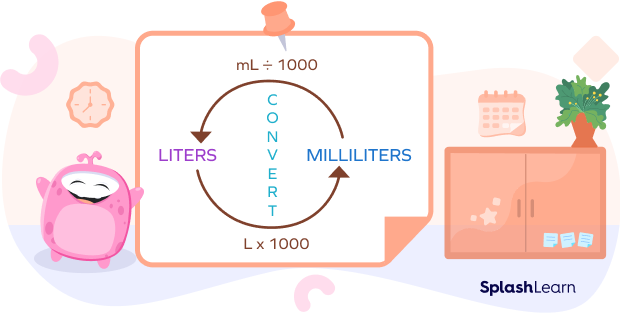
- 1 L = 1 000 mL
- 1 mL = 1 000 µL
- 1 µL = 0.001 mL
That last line is the key to the “easy conversion” you’re after.
Why 1000 Microliters Equals 1 Milliliter
The relationship is built into the metric prefixes themselves. “Milli‑” means one‑thousandth (10⁻³) and “micro‑” means one‑millionth (10⁻⁶). Subtract the exponents (‑³ – ‑⁶ = 3) and you get a factor of 10³, or 1 000. So, 1 000 µL ÷ 1 000 = 1 mL. No calculator required.
In practice, you’d write the conversion as:
1000 µL × 0.001 mL/µL = 1 mL
Notice the “0.001” factor—it’s the decimal shift that turns microliters into milliliters.
Quick Conversion Tips
Even though the arithmetic is simple, it’s easy to slip up when you’re juggling multiple measurements. Here are three habits that keep you on track:
- Write the factor down. Jot “× 0.001” next to any microliter figure before you calculate.
- Use a mental shortcut. Think “move the decimal three places left.” For 2500 µL, that becomes 2.5 mL.
- Double‑check with a reference chart. A small table of common conversions (e.g., 500 µL = 0.5 mL) can be a lifesaver in fast‑paced environments.
Common Mistakes to Avoid
Even seasoned technicians sometimes fall into traps. Here are the most frequent errors and how to sidestep them:
- Mixing up prefixes. Confusing “µL” with “mL” can lead to a 1 000‑fold error—imagine adding a milliliter of a potent reagent when only a microliter was required.
- Skipping the decimal shift. Writing “1000 µL = 1000 mL” is a classic typo; always pause to move the point.
- Relying on memory alone. When you’re handling dozens of samples, muscle memory can betray you. A quick glance at a conversion sheet keeps the mind honest.
Practical Applications
Why does this tiny unit matter? In many fields, precision is non‑negotiable:
Laboratory research
Scientists often dispense reagents in microliter volumes using pipettes. Knowing that 1000 µL equals exactly 1 mL means you can switch between a micropipette and a graduated cylinder without recalculating.
Culinary arts
Modernist chefs sometimes use microliter syringes to add flavor extracts. Converting those amounts to milliliters helps them scale recipes up or down quickly.
Medical dosing
Some injectable medications are prescribed in microliters, especially in pediatric or ophthalmic settings. Accurate conversion to milliliters ensures the right dose is drawn into a syringe.
Tools That Simplify the Process
If you prefer not to do the mental math, a few digital helpers are worth mentioning:
- Smartphone conversion apps. Most free apps let you type “1000 µL” and instantly see “1 mL.”
- Laboratory pipette calculators. Many manufacturers embed conversion tables in the pipette software.
- Online calculators. A quick Google search for “1000 microliters to milliliters” will pop up a built‑in converter.
Even with these tools, understanding the underlying factor (0.001) gives you confidence when the tech fails or when you need to explain the result to a colleague.
FAQ
What is the difference between microliters and milliliters?
Both are metric volume units, but a milliliter is 1 000 times larger than a microliter. One milliliter equals one cubic centimeter, while a microliter is one‑thousandth of that volume.
Can I use a standard kitchen measuring cup for microliter volumes?
Not practically. Kitchen cups are calibrated for milliliters or fluid ounces, and they lack the precision needed for microliters. Use a micropipette or a calibrated syringe for accurate microliter measurements.
Is 1000 µL always exactly 1 mL, regardless of the liquid?
Yes, the conversion is based purely on volume, not on the substance’s density. However, if you need to convert to mass (grams), you’ll have to factor in density.
Why do some sources list 1000 µL as 0.999 mL?
That discrepancy usually stems from rounding errors or temperature‑dependent volume changes. Under standard lab conditions (4 °C to 25 °C), the conversion remains 1 µL = 0.001 mL.