AI in 2000: What the Turn‑of‑the‑Century Looked Like
Where AI Stood at the Turn of the Millennium
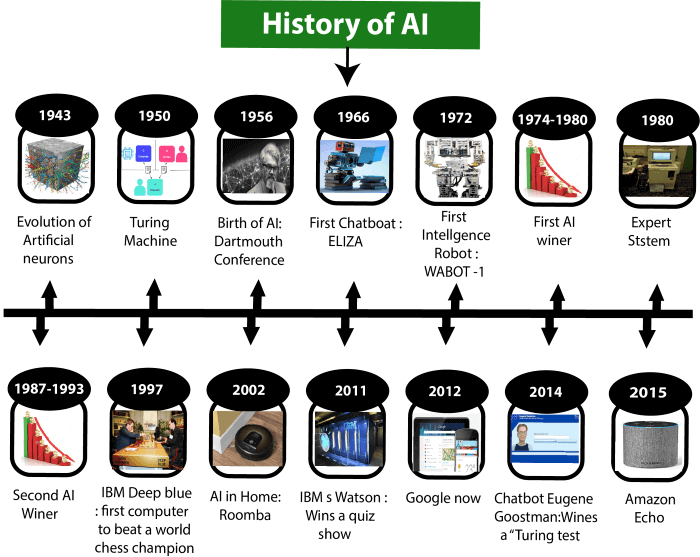
When the calendar flipped to the year 2000, artificial intelligence was already a buzzword, but most of the hype lived in research labs rather than everyday devices. AI in the year 2000 was dominated by rule‑based expert systems, early neural‑network experiments, and a cautious optimism about what computers might eventually achieve. The field was still recovering from the “AI winter” of the late 1980s, a period when inflated expectations led to funding cuts and a sobering reassessment of what was feasible.
In practice, the most visible AI applications were modest: spam filters in email clients, rudimentary speech recognizers on phones, and simple recommendation engines on nascent e‑commerce sites. Companies like IBM were promoting their Deep Blue victory over Garry Kasparov as proof that machines could outthink humans, yet the broader public still associated AI with science‑fiction tropes rather than tangible tools.
Key Technologies That Shaped Early AI
Three technical pillars defined the AI landscape of 2000, each contributing a piece of the puzzle that later breakthroughs would stitch together.
- Expert Systems – Programs that encoded specialist knowledge into if‑then rules. They excelled at narrow tasks such as medical diagnosis (e.g., MYCIN) but struggled with anything beyond their predefined domain.
- Statistical Machine Learning – The rise of support vector machines and early decision‑tree algorithms offered a data‑driven alternative to hand‑crafted rules. Researchers began to appreciate that large datasets could compensate for limited model complexity.
- Neural Networks – Though the term “deep learning” was not yet in vogue, multilayer perceptrons were being revisited after a decade of dormancy. Projects like the University of Toronto’s early work on back‑propagation hinted at the power of layered representations.
Hardware, too, imposed limits. CPUs were still single‑core, and GPUs were primarily used for graphics, not computation. As a result, many experiments ran on modest university clusters, forcing scientists to prioritize algorithmic elegance over brute‑force scale.
Dreams vs. Reality: What Researchers Expected
Academic conferences from that era are peppered with bold predictions: autonomous personal assistants, real‑time language translation, and machines that could understand natural conversation. Some of these visions were genuinely forward‑thinking, while others underestimated the challenges of perception, reasoning, and common‑sense knowledge.
For instance, the idea of a “digital secretary” that could schedule meetings, summarize emails, and anticipate travel needs sounded plausible on paper. In reality, natural‑language processing was hampered by limited corpora and simplistic parsing techniques. The best systems could recognize a handful of commands but often misinterpreted colloquial phrasing.
Yet the optimism was not misplaced. The groundwork laid in 2000—especially the emphasis on data collection and the nascent exploration of convolutional structures for image analysis—would later blossom into the deep‑learning revolution of the 2010s.
Legacy of 2000‑Era AI Today
Looking back, it’s easy to dismiss the turn‑of‑the‑century efforts as quaint, but several concepts have endured. The notion of “training on big data,” for example, was already gaining traction, even if the datasets were tiny by today’s standards. Today’s models—GPT‑4, DALL·E, and AlphaFold—trace their lineage to the statistical learning methods that were just proving their worth in 2000.
Moreover, the ethical concerns raised then echo loudly now. Scholars warned about algorithmic bias in early decision‑tree systems, a conversation that has only intensified as AI becomes more pervasive. The call for transparency and accountability, articulated in papers from the early 2000s, laid the foundation for modern AI governance frameworks.
Finally, the infrastructure shift from CPUs to GPUs, and later to specialized AI accelerators, was foreshadowed by the frustration researchers felt when training even modest neural networks. Their desire for faster computation spurred the hardware innovations that make today’s massive models feasible.
FAQ
What were the most common AI applications in the year 2000?
Typical uses included email spam filters, basic speech recognition on early mobile phones, and rule‑based recommendation engines on e‑commerce sites.
Did any AI system from 2000 achieve human‑level performance?
No system matched human versatility. The most notable milestone was IBM’s Deep Blue defeating a world chess champion, but that success was confined to a single, well‑defined game.
How did hardware limitations affect AI research back then?
With single‑core CPUs and limited memory, researchers prioritized algorithmic efficiency over model size, which slowed progress on large‑scale neural networks.
Are the ethical concerns raised in 2000 still relevant?
Absolutely. Early warnings about bias and lack of transparency have become central themes in today’s AI policy debates.