What Donald Trump’s Views on War Reveal About His Foreign Policy
When Donald Trump spoke about war, his remarks often sounded like a mix of business‑style bargaining and blunt nationalism. Those comments weren’t random; they were a window into a foreign‑policy playbook that prized cost‑benefit analysis, “America First” rhetoric, and a willingness to upend long‑standing alliances. Understanding what Trump said about war helps explain why his administration acted the way it did in places ranging from the Middle East to Eastern Europe.
Trump’s Core Premise: War as a Bad Deal
Trump repeatedly framed armed conflict as a financial liability. In a 2017 interview he noted that “war is terrible, it costs a lot of money, and it’s not good for the American people.” That statement echoed a broader belief that any military engagement must pass a strict cost‑benefit test before the United States commits troops or resources.
Consequently, his administration was quick to pull back from protracted wars that lacked clear, measurable objectives. The most notable example was the decision to reduce the U.S. footprint in Afghanistan, culminating in the 2020 agreement with the Taliban that set a timetable for withdrawal.
Critics argued that this approach ignored strategic considerations beyond the ledger, but supporters pointed to the reduction in American casualties and the financial savings—estimated in the billions of dollars over the next decade.
“America First” and the Reluctance to Intervene
The “America First” mantra wasn’t just a campaign slogan; it was the lens through which Trump evaluated foreign crises. When asked about potential U.S. involvement in a hypothetical conflict in the South China Sea, he replied that “the United States should look out for itself first, then we can help other countries if it makes sense.”
This stance manifested in concrete policy moves:
- Reduced NATO spending expectations: Trump demanded that European allies boost defense budgets to at least 2% of GDP, arguing that the U.S. should not bear the brunt of collective security.
- Questioning the value of the Iran nuclear deal: He labeled the 2015 JCPOA a “disaster” and withdrew the United States in 2018, insisting that the agreement didn’t adequately curb Tehran’s regional aggression.
- Limited engagement in the Syrian civil war: After striking a Syrian airbase in response to a chemical attack, Trump soon announced a “complete withdrawal of U.S. forces” from the country.
These actions underscored a pattern: Trump was willing to use force when it served a clear, direct American interest, but he balked at interventions that seemed to serve broader, less tangible goals.
Transactional Diplomacy: Negotiating From a Position of Strength
Trump’s war rhetoric often resembled a negotiation tactic. He believed that projecting strength would compel adversaries to the negotiating table on terms favorable to the United States. The 2018 summit with North Korean leader Kim Jong‑un, for instance, was framed as “the biggest diplomatic breakthrough” after a series of missile tests that Trump described as “a very, very serious threat.”
While the summit did not produce a concrete denuclearization agreement, it demonstrated Trump’s belief that personal rapport and high‑profile meetings could replace traditional diplomatic channels. In his view, a strong‑arm approach—sometimes punctuated by the threat of sanctions or military action—could extract concessions without the need for prolonged conflict.
Case Studies: How War Talk Shaped Specific Policies
Ukraine and Russian Aggression
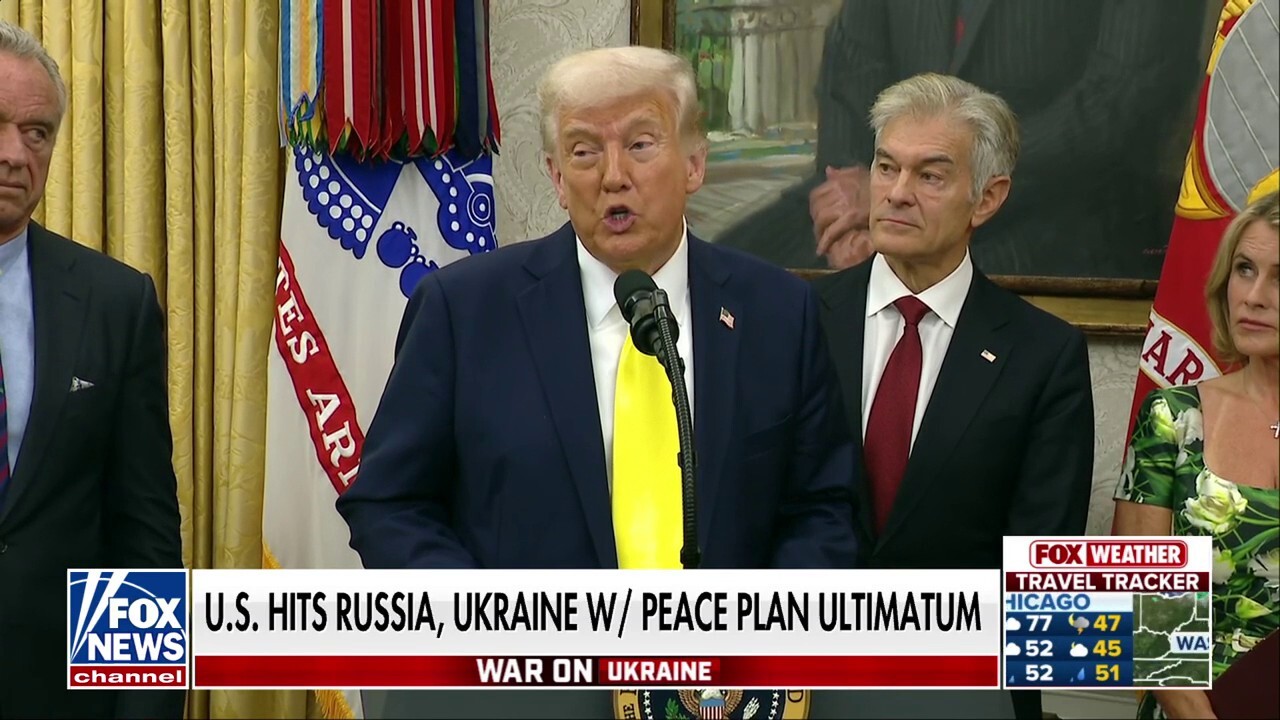
During the early stages of Russia’s 2022 invasion of Ukraine, Trump’s public comments were mixed. He criticized the “endless war” in Europe and suggested that the United States should not become the world’s police force. Yet, behind the scenes, his administration continued to provide defensive aid to Ukraine, arguing that a Russian victory would destabilize the region and ultimately threaten U.S. interests.
This ambivalence highlighted a central tension in Trump’s foreign policy: a desire to avoid direct entanglement paired with an awareness that certain wars, if left unchecked, could create larger strategic headaches down the line.
The Middle East Realignment
Trump’s approach to war in the Middle East was perhaps the most pragmatic. He brokered the Abraham Accords, normalizing relations between Israel and several Arab states, and he reduced U.S. troop levels in Iraq and Syria. By positioning America as a facilitator rather than an occupier, he aimed to maintain influence while minimizing direct combat involvement.
His withdrawal from the Iran nuclear deal and the imposition of “maximum pressure” sanctions on Tehran were also framed as a war‑by‑proxy strategy—using economic tools to achieve what he deemed a more efficient outcome than a costly ground war.
What Remains Unanswered
Trump’s war‑centric commentary left several questions open. For example, how would his administration have responded if a major power—say China—had launched a full‑scale invasion of a U.S. ally? Would the cost‑benefit analysis have tipped in favor of a robust military response, or would diplomatic pressure have been the preferred route?
Moreover, the emphasis on short‑term financial savings sometimes clashed with longer‑term security objectives. Critics argue that premature withdrawals can create power vacuums that adversaries readily exploit, as seen in the resurgence of the Taliban after the 2021 Afghanistan exit.
FAQ
Q: Did Trump ever justify a war on moral grounds?
A: Generally, Trump framed war decisions in economic or strategic terms rather than moral ones. He rarely invoked humanitarian arguments, preferring to discuss the direct impact on American taxpayers and security.
Q: How did Trump’s view on NATO differ from previous presidents?
A: While all U.S. presidents have encouraged allies to meet defense spending targets, Trump made public threats to reduce U.S. contributions unless NATO members hit the 2% GDP benchmark, turning the alliance’s financial obligations into a negotiating lever.
Q: Was Trump’s “America First” policy compatible with global anti‑terrorism efforts?
A: The policy led to a more selective engagement. For instance, the U.S. continued counter‑terrorism operations in the Sahel but scaled back large‑scale deployments elsewhere, reflecting a desire to protect American interests while limiting exposure.
Q: Did Trump’s stance on war influence subsequent administrations?
A: Elements of his cost‑focused approach resurfaced during the Biden administration’s “great power competition” framework, particularly in debates over the size and scope of the U.S. overseas military presence.