Vanguard vs. Charles Schwab: Which Brokerage Wins on Fees?
When it comes to investing, the cost of a brokerage account can add up quickly. For many investors, the choice between Vanguard and Charles Schwab often hinges on which firm offers the lower fee structure. In this comparison, we break down the key fee components—trading commissions, account minimums, management fees, and additional costs—to help you decide which broker truly delivers the best value.
Trading Commissions: Zero or Minimal?
Both Vanguard and Charles Schwab have eliminated commissions for online equity trades in the United States, but their approaches differ slightly. Vanguard offers free trades on its own U.S. stocks, ETFs, and mutual funds, with the exception of a small “service fee” on certain exchange‑traded funds that applies only to high‑volume investors. Schwab, on the other hand, provides zero commissions on U.S. stock, ETF, and options trades, and it also includes a modest $0.65 per contract fee for options. For most casual traders, the difference in commission costs is negligible, but if you plan to trade options frequently, Schwab’s lower option cost can be a decisive factor.
Mutual Fund Fees
Vanguard is renowned for its low expense ratios, especially for its index funds. However, if you buy Vanguard funds through a non‑Vanguard broker, a $15.95 “front‑end” fee is charged on every purchase. Schwab offers a comparable selection of low‑cost index funds, and its own Schwab Index Funds have no front‑end fee. In addition, Schwab’s “Smart Portfolios” include a management fee of 0.20% for the 5–10 % asset‑allocation tier, whereas Vanguard’s equivalent plans start at 0.30%. For investors who prefer to buy mutual funds directly through the broker, Schwab’s fee structure is slightly more advantageous.
Account Minimums and Inactivity Fees
Vanguard’s standard brokerage account has a $0 minimum, but its Investor Services account requires a $3,000 minimum to avoid a $20 annual inactivity fee. Schwab, by contrast, has no minimum for a regular brokerage account and does not charge inactivity fees on any of its account types. This flexibility is attractive for new investors who want to start small and grow gradually.
Management Fees and Expense Ratios
The core of the Vanguard brand is its emphasis on low expense ratios. The average expense ratio for Vanguard’s ETFs is 0.05%, while Schwab’s ETFs average 0.08%. For index funds, Vanguard’s average expense ratio sits at 0.04%, compared to Schwab’s 0.07%. Even though the difference might seem marginal, over time and across a portfolio of thousands of dollars, the savings can accumulate significantly. That said, Schwab’s low‑cost options and the availability of no‑expense‑ratio index funds from other providers on its platform give it a competitive edge for investors who prefer a broader selection.
Additional Costs: Margin, Futures, and Foreign Exchange
Margin borrowing costs are virtually identical, with both brokers charging 8.95% per annum. For futures and foreign exchange, Schwab’s fee schedule is slightly more transparent, offering a flat 0.08% per contract for futures and no foreign exchange spreads for U.S. dollar purchases. Vanguard’s futures trading is limited to certain products, and it charges a 0.10% commission. For most retail investors, these costs are minor, but if you plan to trade in those markets, Schwab’s structure is more favorable.
Platform Tools and Research Resources
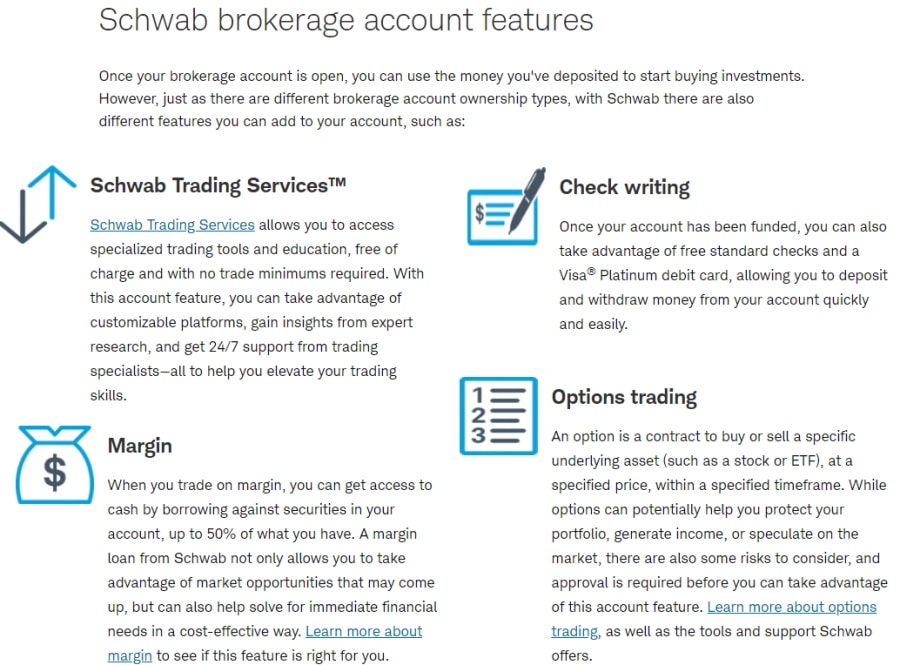
While fees are a major concern, the quality of research and trading tools can influence your overall experience. Schwab’s platform provides robust real‑time data, advanced charting, and access to a wide array of research reports from third‑party vendors. Vanguard’s platform is more streamlined, focusing on simplicity and educational content but offering fewer analytical tools. If you rely on technical analysis or in‑depth research, Schwab’s offerings may justify a slightly higher overall cost.
Customer Support
Both firms offer phone support, but Schwab’s 24/7 chat service and extensive self‑service options are often cited as superior. Vanguard’s customer service is solid but may require more time to resolve certain issues. For investors who value immediate assistance, Schwab could edge out Vanguard.
Which Broker Wins on Fees?
When all the variables are weighed together—commission structure, account minimums, expense ratios, and ancillary fees—the decision often comes down to the investor’s strategy:
- Low‑cost index‑fund investors who prioritize the lowest possible expense ratios may find Vanguard’s fee structure slightly more appealing, especially if they buy Vanguard funds directly.
- Active traders who need robust research tools, lower options fees, and no inactivity charges will likely prefer Schwab.
- New or small‑balance investors benefit from Schwab’s lack of minimums and inactivity fees, allowing them to start investing with minimal upfront commitment.
- Long‑term investors who hold large balances for many years can gain substantial savings from Vanguard’s consistently lower expense ratios.
In practice, the difference in annual fees for a typical portfolio may range from a few dollars to a few hundred dollars, depending on the size of the investment. Over a decade, those savings can become a notable boost to portfolio growth.
Frequently Asked Questions
What are the account minimums for Vanguard and Schwab?
Vanguard requires a $3,000 minimum for its Investor Services brokerage account to avoid an inactivity fee, while Schwab has no minimum for a standard brokerage account.
Do either of these brokers charge commissions on mutual funds?
Vanguard charges a $15.95 front‑end fee on its mutual funds when purchased through non‑Vanguard platforms. Schwab’s mutual funds typically have no front‑end fee, and its own Schwab Index Funds have zero fees.
Are there any inactivity or annual maintenance fees?
Vanguard charges a $20 annual inactivity fee if the account balance falls below $3,000. Schwab does not impose inactivity fees on any of its account types.
Which broker offers better research tools?
Schwab’s platform includes advanced charting, real‑time data, and access to third‑party research reports. Vanguard focuses on simplicity and educational material, offering fewer analytical tools.