Understanding News Agencies: A Complete Guide
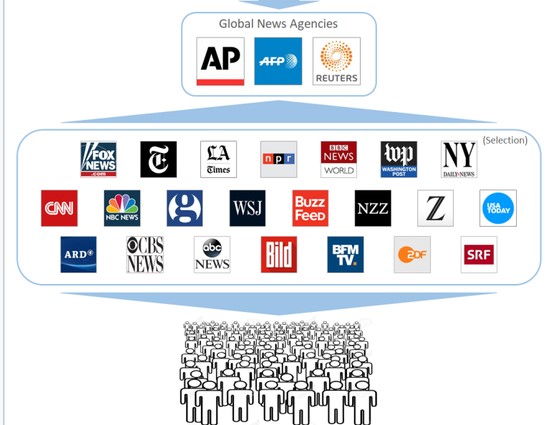
When you scroll through a headline or watch a breaking‑news clip, a good chance the story originated at a news agency. These organizations act as the backbone of modern journalism, gathering facts, producing copy, and distributing it to newspapers, broadcasters, and websites worldwide. In this guide we’ll unpack what a news agency is, how it operates, and why its role matters for both media professionals and the public.
What Exactly Does a News Agency Do?
A news agency is a specialized service that collects raw information—facts, photos, video, and even graphics—and then packages it into ready‑to‑publish stories. Unlike a newspaper that focuses on a specific audience, an agency supplies content to a broad network of clients, ranging from local papers to international TV channels. This means agencies must maintain a relentless news‑gathering operation, often with reporters stationed in dozens of countries, a robust fact‑checking team, and a fast‑moving editorial workflow.
From Telegraph Wires to Digital Feeds: A Brief History
The first modern news agency, the French Agence Havas, launched in 1835, using the telegraph to relay reports across Europe. In the United States, the Associated Press (AP) formed in 1846 when several newspapers pooled resources to share stories and reduce costs. Over the next century, agencies expanded their reach, adding photography in the early 1900s and establishing satellite bureaus after World War II. The digital revolution of the 1990s shifted distribution from printed wires to internet‑based feeds, allowing real‑time updates and multimedia packages that can be embedded directly into a newsroom’s content management system.
Key Types of News Agencies
- Wire Services – The classic model exemplified by AP, Reuters, and AFP. They provide text, photos, and video to subscribers on a pay‑per‑story or subscription basis.
- Specialist Agencies – Focus on niche topics such as finance (Bloomberg), sports (Sporting News), or entertainment (Getty Images). Their expertise lets clients access in‑depth coverage that general wires might gloss over.
- Regional Agencies – Serve specific geographic areas, for example, the African News Agency or the Asia‑Pacific News Network. They often translate stories into local languages and highlight regional perspectives.
How Do News Agencies Make Money?
Revenue streams are surprisingly diverse. The most visible source is subscription fees from media outlets that pay for access to a daily feed of stories. Agencies also sell individual pieces to non‑subscribers—think a local TV station purchasing a single photo from Reuters. Licensing agreements for archival material, custom reporting contracts, and even data‑analytics services have become lucrative add‑ons in the digital age. Because agencies operate on a wholesale model, they can keep costs low while delivering a massive volume of content.
Choosing Reliable Agency Content
In an era of misinformation, vetting the source of news is crucial. Established agencies adhere to strict editorial standards, employing multiple layers of fact‑checking and clear attribution practices. Look for the agency’s byline, a transparent correction policy, and evidence of an editorial code of conduct. When a story cites a reputable agency, you can generally trust its accuracy, though it’s still wise to corroborate critical details with additional sources.
Impact on the News Landscape
Because agencies supply the raw material for countless outlets, they shape the global news agenda. A story that appears on the AP wire often gets reprinted verbatim in dozens of newspapers, amplifying its reach. Conversely, the concentration of a few dominant agencies can limit diversity of perspective, prompting many independent outlets to supplement wire content with original reporting. Understanding this dynamic helps readers recognize why certain topics dominate headlines worldwide.
FAQ
Q: How is a news agency different from a news outlet?
A: A news agency gathers and distributes news to many outlets, while a news outlet (like a newspaper or TV channel) curates and presents that content directly to its audience.
Q: Can anyone access wire stories for free?
A: Most agencies require a subscription or licensing fee. However, they often provide limited free snippets for public interest pieces, and some regional agencies offer open‑access content for educational use.
Q: Do news agencies cover local news?
A: Large wire services focus on national and international events, but many have local bureaus or partner with regional agencies to provide area‑specific coverage.
Q: How do agencies ensure impartiality?
A: Reputable agencies follow editorial guidelines that stress neutrality, multiple source verification, and prompt corrections. They typically separate news reporting from opinion sections to maintain clear boundaries.