Understanding Natural Identity: Real-World Examples Explained
What Is Natural Identity?
When you hear the phrase “natural identity,” you’re really hearing a shortcut for a surprisingly broad idea: the set of characteristics that make something what it is, independent of human labels or artificial constructs. In biology, it’s the genetic blueprint that ties a species together; in physics, it’s the intrinsic properties that render particles indistinguishable. Across disciplines, the concept hinges on the notion that some essence persists despite superficial changes.
Why It Matters in Everyday Life
Even if you’re not a scientist, you rely on natural identity every day. Your passport proves that the person inside the document is the same individual who was born a decade ago. A coffee bean’s flavor profile stays true to its variety, no matter which roaster handles it. Recognizing these stable traits helps us make predictions, build trust, and navigate a world where appearances can be misleading.
Classic Examples Across Disciplines
- Biology: Species identity preserved through DNA.
- Physics: Identical particles sharing mass, charge, and spin.
- Mathematics: The identity element that leaves numbers unchanged.
- Philosophy: Personal identity over time despite memory gaps.
- Law: Legal identity grounded in birth records and biometric data.
Biology: Species and Genetic Continuity
Take the domestic dog. Regardless of breed—be it a Chihuahua or a Great Dane—each dog carries the same core genome that classifies it as Canis lupus familiaris. That genetic core is the natural identity of the species. It explains why a Labrador can interbreed with a German Shepherd and produce fertile offspring, while a dog cannot successfully mate with a cat.
Physics: Indistinguishable Particles
In the quantum realm, electrons are the poster child for natural identity. Every electron in the universe has exactly the same mass, charge, and spin; there is no “special” electron that behaves differently just because it originated in a different atom. This perfect sameness is why physicists can treat a swarm of electrons as a single statistical ensemble, simplifying everything from semiconductor design to nuclear fusion research.
Mathematics: The Identity Element
Mathematicians speak of an “identity element” as the number that leaves other numbers unchanged when combined with them. For addition, that number is zero: 5 + 0 = 5. For multiplication, it’s one: 7 × 1 = 7. The identity element’s natural identity is its ability to do nothing—yet it’s essential for defining structures like groups and rings.
Philosophy: The Self Over Time
Philosophers have wrestled with the question of personal identity for centuries. If you lose a limb, change your name, or undergo a major personality shift, are you still the same person? Most theories converge on a “psychological continuity” view: the persistence of memory, intention, and consciousness creates a natural identity that survives superficial alterations.
How to Recognize Natural Identity in Your Own Context
- Look for traits that remain constant despite external changes (e.g., a brand’s core values).
- Ask whether the characteristic is essential for classification or merely decorative.
- Check if the trait can be measured objectively—DNA markers, mass, or logical properties are good signs.
- Consider the role of continuity: does the attribute persist over time or across different environments?
Common Misconceptions
Many people assume “identity” is purely social, but natural identity cuts across cultural boundaries. Another frequent error is treating any recurring pattern as a natural identity. A fashion trend, for instance, may repeat, yet it lacks the intrinsic, unalterable quality that defines true natural identity. Finally, some think natural identity is static; in reality, it can evolve when the underlying essence changes—think of a species that diverges into two distinct lineages.
Frequently Asked Questions
Is natural identity the same as legal identity?
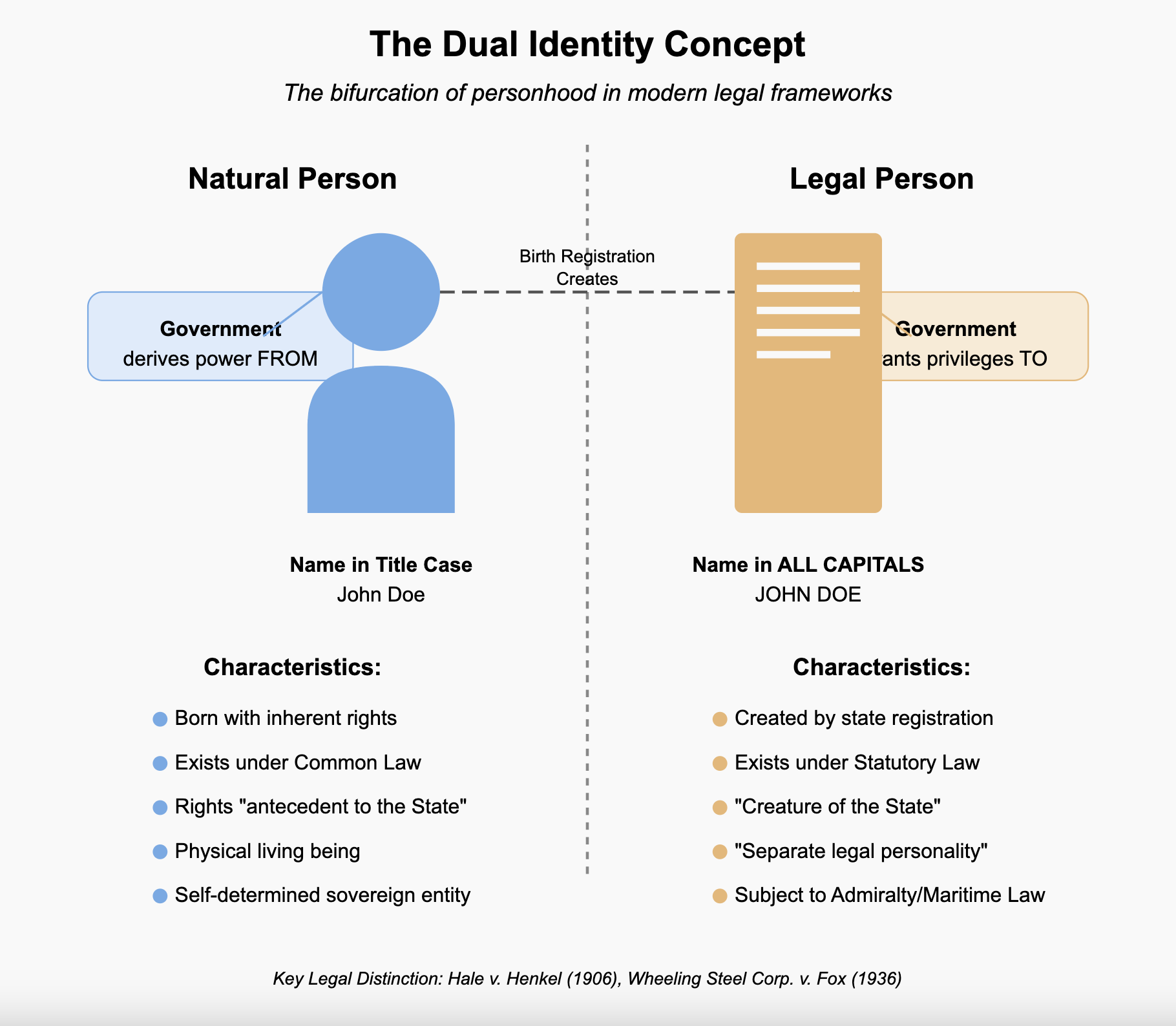
Not exactly. Legal identity is a formal record—birth certificates, social security numbers—used for administrative purposes. Natural identity, by contrast, refers to the inherent characteristics that make an entity what it is, regardless of documentation.
Can artificial intelligence have a natural identity?
Currently, AI systems lack the autonomous, self-sustaining properties that would grant them a natural identity. They are built on code and data that can be altered or copied without losing their “essence,” which is a hallmark of natural identity.
How does natural identity relate to climate change research?
Scientists track the natural identity of ecosystems—species composition, genetic diversity, and biogeochemical cycles—to assess how climate stressors are shifting those baselines. By comparing current data to the ecosystem’s original identity, they can gauge the magnitude of change.
Do cultural traditions reflect natural identity?
While cultural practices are deeply meaningful, they are typically socially constructed rather than innate. However, some traditions may arise from a community’s shared natural environment, subtly echoing the natural identity of the region.