Understanding Economic Systems: Definitions, Types, and How They Shape Society
What Is an Economic System?
At its core, an economic system is the framework a society uses to decide what goods and services get produced, how they are distributed, and who ultimately enjoys the benefits. It intertwines three fundamental questions—what to produce, how to produce it, and for whom—to turn scarce resources into something that meets human needs. Whether a village trades hand‑woven baskets or a nation negotiates multi‑trillion‑dollar trade deals, the same basic choices underlie every transaction.
Key Characteristics Across Different Systems
Although the label “market,” “command,” or “mixed” often dominates headlines, each system shares a handful of core traits that help us compare them.
- Resource allocation method: Some rely on price signals, others on central planning, and still others on customs or a blend of both.
- Ownership of the means of production: Private individuals, the state, or community groups may hold factories, land, and technology.
- Incentive structure: Profit motives, communal obligations, or bureaucratic directives drive decision‑making.
- Role of government: Ranges from hands‑off regulator to sole economic director.
These variables interact in complex ways, producing outcomes that can look surprisingly similar on the surface—think of a small town where a family farm coexists with a locally owned grocery store, both serving the same community.
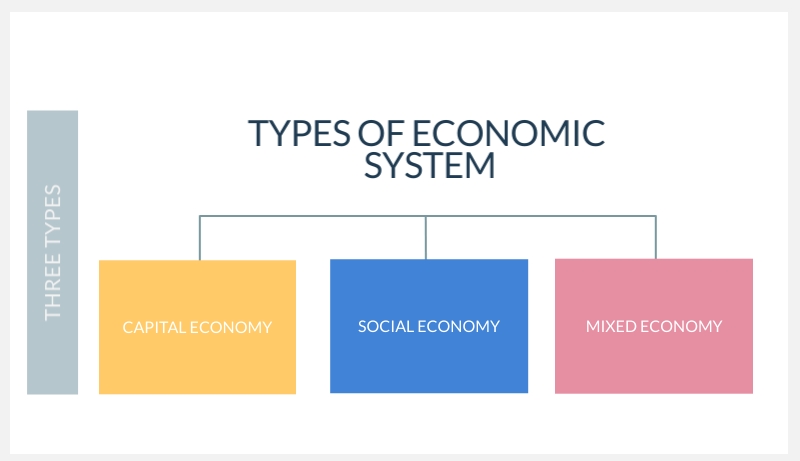
Major Types of Economic Systems
Traditional Economy
Traditional economies lean heavily on customs, rituals, and historical precedent. Production usually centers around agriculture, hunting, or fishing, with families passing down techniques generation after generation. Because decisions flow from long‑standing norms, change tends to be slow, but social cohesion is often strong. Examples still exist in remote regions of Africa, the Pacific Islands, and among Indigenous groups in North America.
Command (or Centralized) Economy
In a command system, the state holds the reins of resource allocation. Central planners set production targets, dictate prices, and assign labor through ministries or agencies. The goal is often to achieve rapid industrialization, eliminate unemployment, or pursue ideological objectives. Historical examples include the Soviet Union and Mao‑era China. Modern remnants appear in places where the government controls key sectors such as energy or telecommunications.
Market (Capitalist) Economy
Market economies prioritize private ownership and price mechanisms. Firms compete for customers, and consumers signal preferences through what they’re willing to pay. Competition ideally spurs efficiency, innovation, and a wide variety of choices. The United States, Canada, and most of Western Europe operate predominantly under this model, though none are pure “laissez‑faire” systems; regulations on safety, antitrust, and environmental standards are common.
Mixed Economy
Most contemporary nations fall somewhere between the extremes, blending market forces with government intervention. A mixed economy might let private businesses thrive while the state provides universal healthcare, public education, or infrastructure. The balance shifts over time: during a recession, a government may increase spending to stimulate demand, whereas in boom periods it might tighten fiscal policy to curb inflation.
Because real‑world economies are fluid, categorizing a country as strictly “market” or “command” can be misleading. For instance, Sweden boasts a robust welfare state and high taxes, yet its businesses operate in competitive global markets. The same blend of public and private elements can look very different depending on cultural values, historical legacies, and political institutions.
How Economic Systems Influence Everyday Life
Beyond abstract theory, the type of economic system shapes the daily choices of individuals. In a market‑driven setting, a budding entrepreneur can launch a tech startup with relatively low barriers, but they also face the risk of bankruptcy. In a command economy, a worker might enjoy guaranteed employment but have limited say over wages or career direction. Traditional economies often prioritize communal well‑being over personal profit, meaning success is measured in terms of social harmony rather than financial gain.
Policy makers constantly grapple with trade‑offs. Tightening regulation can protect consumers and the environment but may also stifle innovation. Expanding state ownership can ensure essential services reach remote areas, yet it risks bureaucratic inefficiency. Understanding the underlying system helps citizens anticipate the ripple effects of new laws, tax reforms, or international agreements.
Why the Debate Still Matters
Globally, debates about the “right” economic system surface whenever crises erupt—whether it’s a pandemic, climate emergency, or financial collapse. Proponents of market solutions argue that competition yields the fastest breakthroughs, citing the rapid development of COVID‑19 vaccines as an example. Advocates for stronger state involvement point to the need for coordinated responses, such as nationwide stimulus packages that kept many economies afloat in 2020.
In practice, most societies opt for a pragmatic middle ground, adjusting the mix of market freedom and governmental oversight as conditions evolve. The flexibility to re‑balance these elements is perhaps the most distinctive feature of modern economic systems.
Frequently Asked Questions
What distinguishes a mixed economy from a purely capitalist one?
A mixed economy blends private enterprise with significant government intervention. While capitalism relies chiefly on market forces, a mixed system incorporates public services, regulation, and social safety nets to address market failures and promote equity.
Can an economy shift from one type to another?
Yes. Historical transitions—such as China’s gradual opening to market mechanisms after 1978—show that economies can evolve, often blending elements of different systems over decades.
Which economic system best handles environmental challenges?
No single system offers a perfect solution. Market incentives can drive green technology when carbon pricing is introduced, whereas strong state policies can enforce standards and fund large‑scale renewable projects. Most experts advocate a hybrid approach that leverages both market innovation and government coordination.