The tert-Butyl Transfer Reaction: A Powerful Tool for Organic Synthesis
In the world of organic chemistry, a seemingly simple group migration can unlock an extraordinary range of synthetic possibilities. The tert‑butyl transfer reaction is one of those elegant maneuvers, allowing a bulky tert‑butyl (t‑Bu) group to hop from one heteroatom or carbon skeleton to another. Its versatility stems from the high stability of the tert‑butyl cation‑like intermediate and the mild conditions under which the transfer typically occurs. As a result, chemists have adopted this reaction for late‑stage functionalization, protecting group strategies, and even in the synthesis of complex natural products.
What makes the tert‑butyl transfer so appealing is its ability to act as a pseudo‑protecting group that can be installed and removed with minimal impact on sensitive functional groups. Unlike traditional protecting groups that require harsh reagents for deprotection, the tert‑butyl moiety can often be displaced by nucleophiles, acids, or metal catalysts under relatively gentle conditions. This flexibility has led to its incorporation into multi‑step syntheses where conventional protecting group chemistry would add unnecessary complexity.
Why the tert-Butyl Transfer Reaction Matters
At its core, the tert‑butyl transfer provides a strategic handle for chemists to manipulate the regiochemistry of a molecule. Because the tert‑butyl group is bulky, it can steer nucleophilic attacks or electrophilic additions to more accessible sites. Moreover, the transfer can be reversible under certain conditions, offering a dynamic equilibrium that can be exploited for selective transformations.
The reaction also serves as a mild method to introduce or remove tert‑butyl groups in the presence of other acid‑sensitive functionalities such as epoxides, aldehydes, or alkynes. In complex molecule synthesis, preserving these functionalities while installing a protective t‑Bu group is often a delicate balance that the tert‑butyl transfer satisfies.
Mechanistic Overview
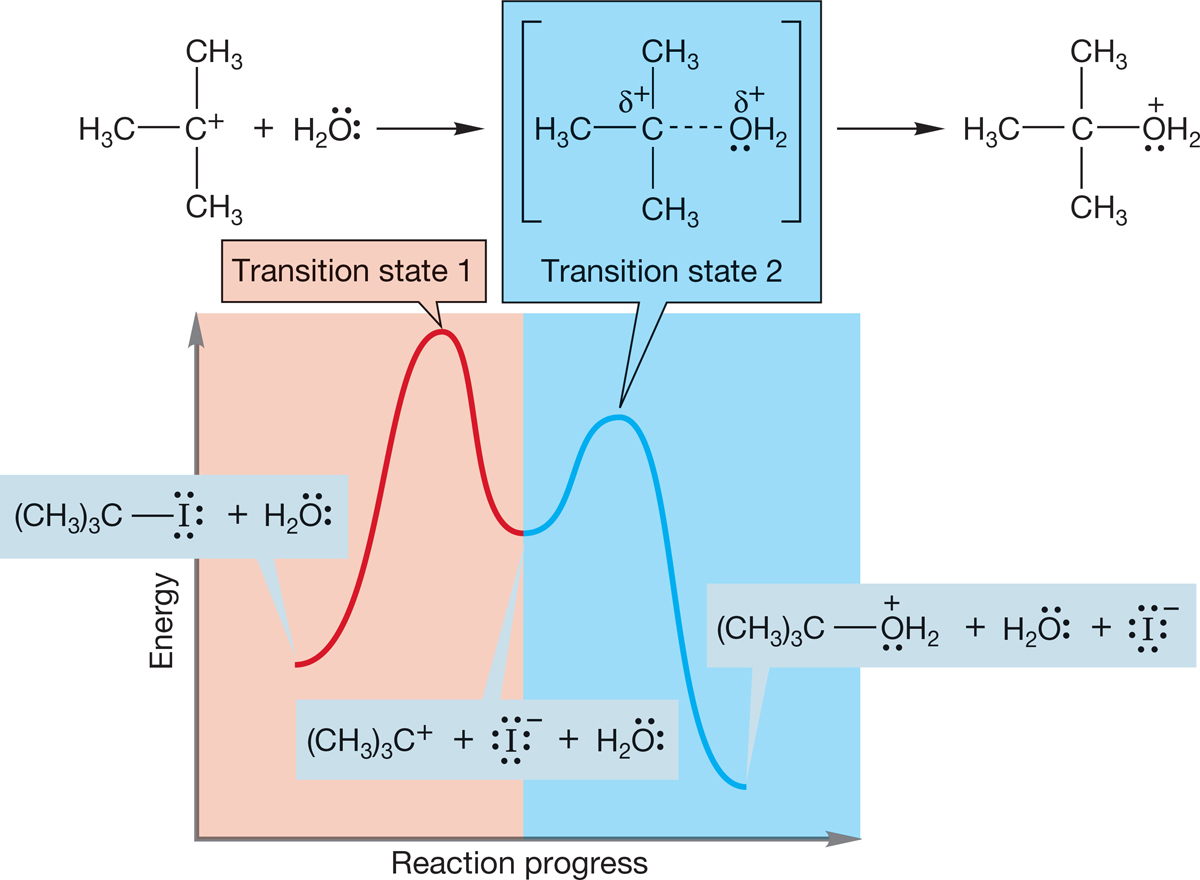
Mechanistically, the tert‑butyl transfer generally proceeds via an electrophilic pathway. An electron‑rich substrate (often a heteroatom like oxygen or nitrogen) coordinates with a Lewis acid or a proton to generate a cationic species. This intermediate can then capture the tert‑butyl group from a tert‑butyl source such as a tert‑butyl sulfate or a tert‑butyl trichloroacetimidate. The process resembles a classic SN1 substitution but with a bulky, highly stabilized tert‑butyl cation that drives the reaction forward.
In some cases, a concerted mechanism is observed where the tert‑butyl group migrates while the leaving group departs in a single transition state. The choice of catalyst, solvent, and temperature often determines which pathway dominates. For instance, Lewis acids like BF₃·OEt₂ favor a more electrophilic, SN1-like route, whereas Brønsted acids can promote a protonation‑induced transfer.
Common Catalysts and Conditions
Lewis acids such as BF₃·OEt₂, AlCl₃, or SnCl₄ are frequently employed to activate the tert‑butyl source. They coordinate to the oxygen of tert‑butyl sulfate or to the trichloroacetimidate, making the tert‑butyl moiety more electrophilic. In many protocols, the reaction is run in dichloromethane or toluene at room temperature, ensuring that sensitive groups remain intact.
Protic acids, like p-toluenesulfonic acid or trifluoroacetic acid, also catalyze the transfer, especially when the substrate contains acidic protons that can assist in proton shuttling. In these scenarios, the reaction is often performed at 0 °C to prevent unwanted side reactions.
Recently, transition‑metal catalysts—particularly gold(I) or silver(I)—have been explored for tert‑butyl transfer to activate alkynes or alkenes, expanding the reaction’s utility to π‑systems. These metal‑catalyzed processes typically require low temperatures and inert atmosphere to maintain catalytic efficiency.
Applications in Complex Molecule Synthesis
The tert‑butyl transfer has found a niche in the synthesis of pharmaceuticals, natural products, and polymer precursors. One notable advantage is its compatibility with stereochemically sensitive substrates. Because the reaction proceeds under neutral or mildly acidic conditions, chiral centers are rarely disturbed.
In a recent synthesis of a marine alkaloid, chemists used a tert‑butyl transfer to temporarily mask an alcohol while constructing a densely functionalized core. After the key carbon–carbon bond formation, the tert‑butyl group was removed in a single step with a mild acid, revealing the free hydroxyl for further elaboration. This approach reduced the number of protecting‑group manipulations from six to three.
Another application is in the late‑stage functionalization of complex aromatic compounds. By installing a tert‑butyl group on a phenol, researchers could control ortho/para selectivity in subsequent electrophilic aromatic substitution reactions. Once the substitution was complete, the tert‑butyl group was cleaved to liberate the desired phenolic product.
Case Studies
1. Antitumor Agent Synthesis: A chemist leveraged tert‑butyl transfer to protect a primary amine while performing a Mannich reaction on a sensitive aldehyde. The transfer was achieved using tert‑butyl trichloroacetimidate and BF₃·OEt₂. After the Mannich step, the tert‑butyl group was cleaved with aqueous HCl, yielding the free amine without racemization.
2. Polymer Precursor Construction: In the design of a new monomer for high‑performance plastics, the tert‑butyl group was used to protect a hydroxyl-bearing side chain during a Fried