Payback Period Demystified: How to Measure ROI Quickly
The payback period is a simple yet powerful metric that tells you how long it will take to recover the initial investment in a project. By focusing on cash flow rather than accounting profits, this approach gives investors and managers a clear, time‑based measure of risk and liquidity.
What Is the Payback Period?
The payback period calculates the length of time required for cumulative net cash inflows to equal the original outlay. It answers the fundamental question: When will I start seeing a return on my money? Because it relies solely on cash flows, it is often the first step in evaluating capital projects, especially in capital‑constrained or high‑uncertainty environments.
How to Calculate the Payback Period
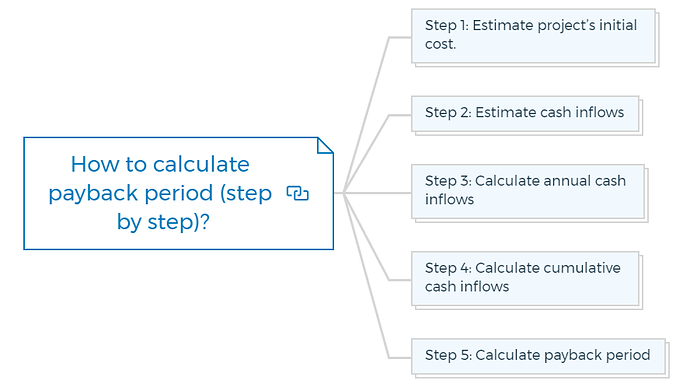
Follow these three straightforward steps to derive the payback period for any investment:
- List the annual cash inflows. Estimate or obtain the cash that will be received each period (usually yearly).
- Sum the inflows cumulatively. Add each year's cash inflow to the previous total until the cumulative sum equals or surpasses the initial investment.
- Determine the break‑even point. If the cumulative inflow crosses the investment during a specific year, interpolate to find the exact month or quarter.
For instance, if an equipment purchase costs $50,000 and the project yields $10,000 in year one, $12,000 in year two, and $15,000 in year three, the cumulative inflows after two years total $22,000. In year three, the cumulative reaches $37,000, still below the $50,000 threshold. Interpolating within the third year gives a payback of roughly 3.2 years.
Why the Payback Period Matters
Although it ignores time value and cash beyond the break‑even point, the payback period offers several advantages:
- Liquidity focus. It tells you when the cash you invested will return, a critical factor for businesses that need to free up capital quickly.
- Simplicity. No discount rates or complex formulas are required, making it accessible to non‑financial staff.
- Risk assessment. Projects that recover quickly typically present lower risk of loss, as less cash is exposed over time.
Because of its simplicity, many organizations set a benchmark—such as a maximum acceptable payback period of two years—and reject projects that exceed it, even if overall profitability is high.
Limitations to Keep in Mind
While useful, the payback period has notable drawbacks that can lead to misguided decisions if used in isolation:
- Time value of money is ignored. A dollar earned today is worth more than a dollar earned in five years.
- Cash after payback is ignored. A project with a short payback period may still generate less total cash than a longer‑term project.
- Doesn’t consider project risk. Two projects with the same payback period could have very different risk profiles.
Therefore, it is best paired with more comprehensive metrics like Net Present Value (NPV) or Internal Rate of Return (IRR) for a full investment appraisal.
When to Use the Payback Period
Choose the payback period approach when:
- Cash flow timing matters. In capital‑tight sectors such as startups or infrastructure projects, knowing when money returns can be the deciding factor.
- Regulatory or policy constraints exist. Some public‑sector funding bodies require a minimum liquidity guarantee before approving grants.
- You need a quick screen. As a first filter, it can quickly eliminate projects that would take too long to recover their costs, saving time on more detailed analysis.
Complementary Techniques
Because the payback period doesn’t account for all financial dimensions, consider these complementary methods:
- Net Present Value (NPV). Calculates the present value of all projected cash flows, incorporating a discount rate.
- Internal Rate of Return (IRR). Finds the discount rate that makes the NPV zero, reflecting the project's profitability.
- Modified Internal Rate of Return (MIRR). Adjusts IRR by considering cost of capital and reinvestment rates for a more realistic picture.
Using a blend of these tools provides a balanced view of risk, profitability, and liquidity.
Practical Example: New Software Implementation
A mid‑size firm wants to invest $120,000 in a new customer‑relationship management (CRM) system. Expected annual cash savings: $35,000 in year one, $40,000 in year two, $45,000 in year three, and $50,000 thereafter. The cumulative cash flow after year two is $75,000, still below the initial outlay. In year three, cumulative inflows reach $120,000, exactly covering the cost. Thus, the payback period is 3 years. If the company’s policy limits payback to 2.5 years, this project would be rejected—despite potentially high NPV.
Implementing Payback Period in Your Workflow
- Define cash flow assumptions. Use reliable data or conservative estimates to avoid over‑optimistic figures.
- Automate calculations. Spreadsheet templates or simple software can quickly generate cumulative cash flow tables.
- Set thresholds. Document the maximum acceptable payback period for the organization and use it consistently.
- Review in context. Pair the metric with NPV/IRR reports to avoid premature dismissal of viable projects.
FAQ
- Can the payback period be negative? No. Since it measures time to recover outlays, it is always zero or positive.
- Does it account for inflation? No. The payback period uses nominal cash flows; inflation can be incorporated by adjusting cash flow estimates.
- How often should I update my payback calculations? Whenever new financial data or revised cash flow estimates become available.
- Is the payback period suitable for all industries? It works best in capital‑intensive or cash‑flow‑sensitive sectors; in others, more comprehensive methods may be preferable.