National Guard vs. Army Reserve: Understanding the Key Differences
When you hear “part‑time soldier,” two names usually pop up: the National Guard and the Army Reserve. Both offer a way to serve the country without committing to a full‑time career, yet they sit on different tracks within the U.S. military system. Knowing how they differ can help prospective service members choose the path that aligns with their personal goals, civilian jobs, and lifestyle.
Key Differences Between the National Guard and the Army Reserve
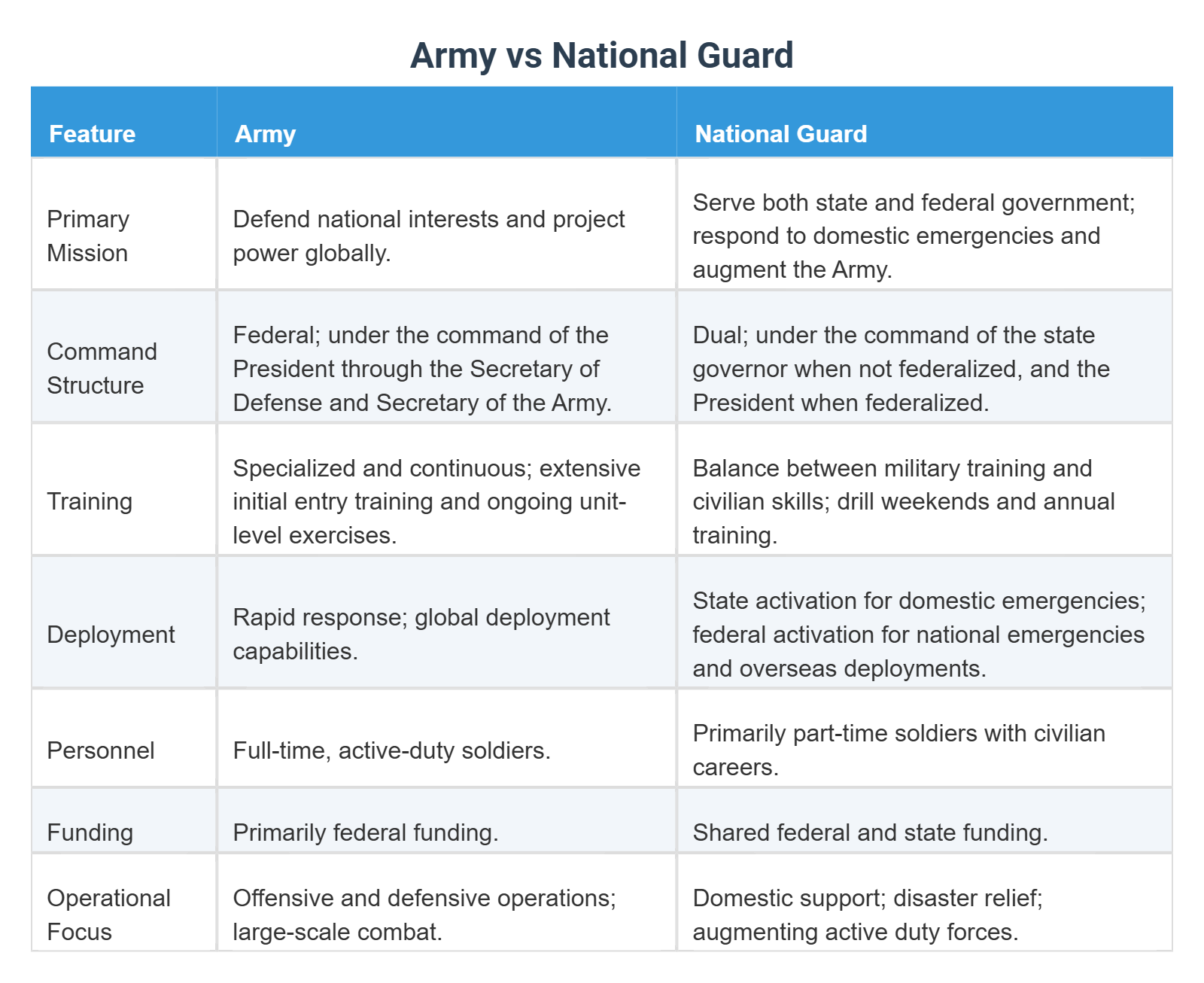
At first glance, the Guard and the Reserve share many similarities—both require one weekend a month and two weeks of annual training, both award the same basic pay, and both can deploy overseas. The real distinctions lie in three areas: mission focus, command structure, and the relationship with state versus federal authorities.
Mission and Primary Role
The National Guard serves a dual mission. Under state governors, Guard units respond to natural disasters, civil unrest, and other emergencies within their own state or territory. When the President federalizes them, they operate alongside active‑duty forces abroad. In contrast, the Army Reserve is a purely federal component; its primary purpose is to provide specialized support—logistics, medical, engineering, intelligence—to the active Army during wartime or national emergencies.
Chain of Command and Authority
Guard soldiers answer to two chains of command. Day‑to‑day, a state Adjutant General—appointed by the governor—directs training and state missions. When federalized, the President and the Department of Defense take over. Reserve members report directly to the Army’s federal chain of command at all times. This split authority means Guard members can be called up for local emergencies without leaving the country, while Reserve members are typically mobilized for overseas operations.
Activation and Deployment Patterns
Because the Guard balances state and federal duties, its activation can be more unpredictable. A snowstorm in the Midwest or a hurricane on the Gulf Coast could trigger a state call‑out, sending soldiers to clear roads or distribute supplies. Federal activations—such as overseas combat missions—usually follow the same process as for the Reserve, but the Guard’s state missions often keep its members closer to home.
Reserve units, on the other hand, tend to have longer, less frequent deployments focused on supporting combat operations abroad. When a Reserve unit is mobilized, it typically integrates into an active‑duty division for the duration of the mission, which can last from several months to over a year.
Training Requirements and Opportunities
Both components require the standard initial entry training (Basic Combat Training and Advanced Individual Training). After that, monthly drills and annual training keep skills sharp. However, the Guard often conducts additional state‑specific training—such as disaster response, crowd control, and civil support—tailored to the hazards common in its region. The Reserve emphasizes technical and occupational training that directly supports the Army’s global operations.
Benefits, Pay, and Education
Pay scales are identical because both use the same military rank and time‑in‑service charts. Benefits such as health care, retirement after 20 years, and the GI Bill are also comparable. Where they diverge is in tuition assistance and state‑specific incentives. Many states offer tuition waivers, loan repayment programs, or tax breaks for Guard members who serve in their jurisdiction. Reserve soldiers must rely on federal programs, though the Army does provide tuition assistance for certain high‑need occupations.
Career Progression and Civilian Integration
If you’re juggling a civilian career, the Guard’s state focus can make it easier to stay close to home. A Guard drill schedule often aligns with local employers who recognize the state service commitment. Reserve members, while equally part‑time, may find that federal deployments pull them farther from their civilian jobs, especially if the mission involves an extended overseas tour.
Both components offer pathways to full‑time active duty, but the Guard’s dual status can sometimes smooth the transition into state emergency management or homeland security roles after service. Reserve veterans frequently move into federal agencies or private‑sector jobs that value their specialized Army skills.
Quick Comparison at a Glance
- Primary Mission: Guard – state & federal; Reserve – federal support.
- Command Authority: Guard – state governor & President; Reserve – President only.
- Typical Deployments: Guard – mix of domestic emergencies & overseas; Reserve – mainly overseas.
- Training Focus: Guard – disaster response, civil support; Reserve – technical and combat support.
- State Benefits: Guard – possible tuition waivers, tax breaks; Reserve – federal tuition assistance only.
- Civilian Job Impact: Guard – often local; Reserve – potentially longer overseas absences.
Frequently Asked Questions
Can I switch from the National Guard to the Army Reserve (or vice versa) later in my career?
Yes. Service members can request an inter‑component transfer, but approval depends on the needs of both components, your MOS, and the timing of your enlistment contract. The process typically involves paperwork through your current unit and the gaining unit.
Do Guard and Reserve members receive the same retirement benefits?
Both earn retirement points toward a pension after 20 years of service, and the calculation method is identical. However, Guard members might also qualify for state‑specific retirement or pension programs that supplement the federal benefit.
Which component offers more opportunities for overseas combat deployments?
The Army Reserve generally has a higher likelihood of being mobilized for prolonged overseas combat operations because its mission centers on supporting active‑duty forces abroad. The Guard does deploy overseas, but its state missions can keep many units focused on domestic duties.
Are there differences in healthcare coverage between the two?
Both receive the same Tricare benefits while on active duty or during mobilizations. When drilling, Guard members may also be eligible for state‑run health programs, depending on the state’s policies, whereas Reserve members rely solely on federal provisions.