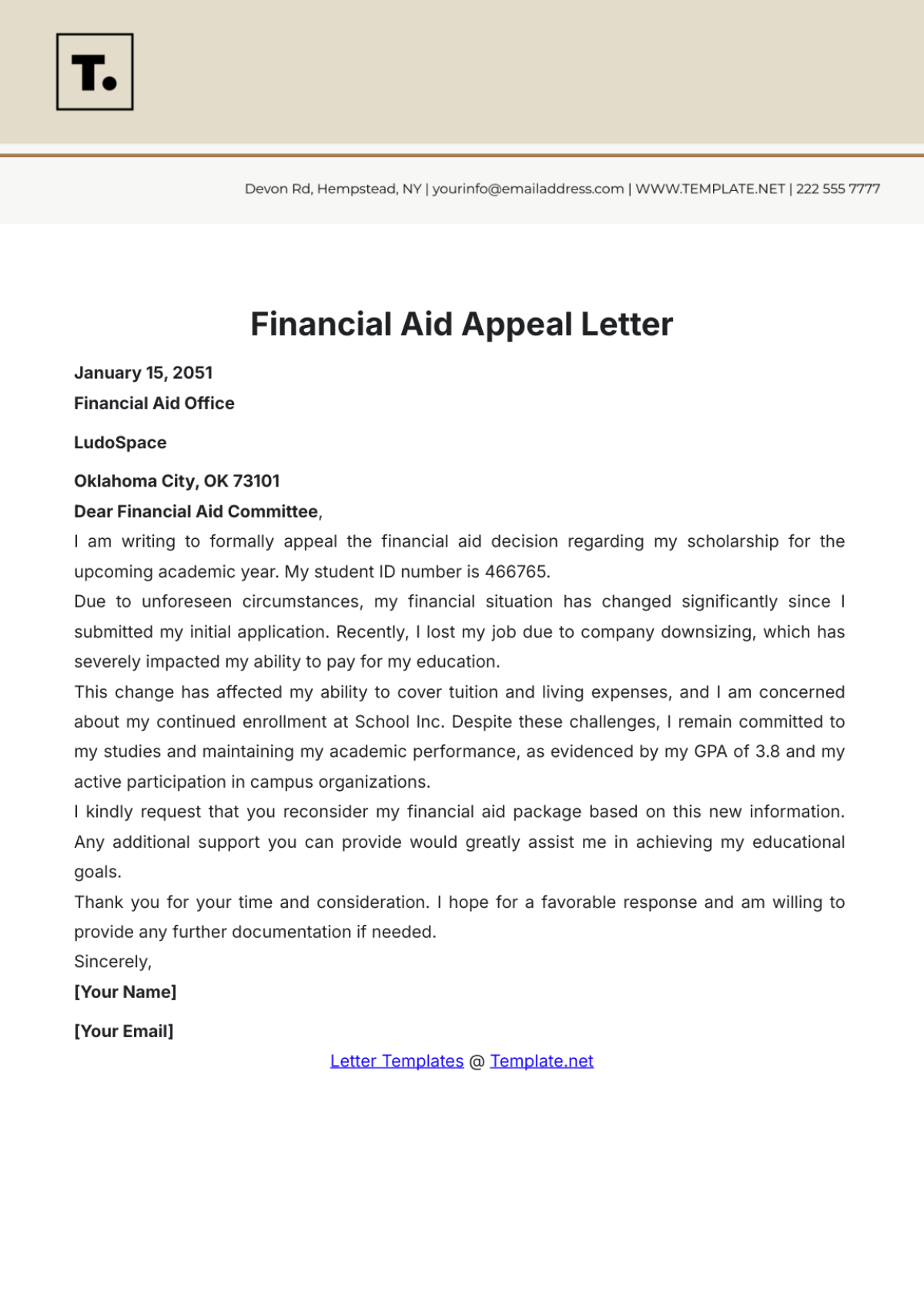
How to Write a Winning IUSC Financial Aid Appeal Letter
Understanding the Appeal Process at IUSC
When your financial aid award doesn’t cover the full cost of attendance, the IUSC Financial Aid Appeal Letter becomes your next line of defense. The university’s Office of Financial Aid reviews appeals on a case‑by‑case basis, looking for genuine hardship, clear documentation, and a respectful tone. Knowing what the committee expects can turn a vague request into a persuasive argument.
Key Elements Every Appeal Letter Should Have
Clear Opening and Context
Start with a brief introduction that states who you are, your student status, and the specific aid award you received. A sentence like, “I am a sophomore majoring in Business Administration, and I was awarded a $3,200 merit scholarship for the 2024‑25 academic year,” immediately grounds the reader.
Compelling Reason for the Request
Explain why the original award falls short. Whether it’s an unexpected medical expense, a family job loss, or a change in household income, be specific. Vague statements such as “I need more money” rarely work; instead, describe the situation: “My mother’s 20‑hour weekly position was eliminated in March, reducing our household income by $1,200 per month.”
Supporting Documentation
Attach the most relevant proof—pay stubs, tax returns, hospital bills, or a letter from an employer. Reference each document in the body: “Enclosed is a copy of my mother’s termination notice and the revised tax return for 2023.” This lets the reviewer see the evidence without hunting for it.
Polite Closing and Call to Action
Wrap up by thanking the committee for their time, restating your request, and offering to provide additional information. A closing line such as, “I appreciate your consideration and am happy to discuss this further at your convenience,” leaves a positive impression.
Step‑by‑Step Guide to Drafting Your Letter
- Gather paperwork. Before you type a single word, collect the most recent financial statements, medical records, or employment letters that illustrate the change in circumstances.
- Outline the letter. Sketch a quick structure: intro, reason, evidence, request, closing. This prevents you from meandering.
- Write a first draft. Focus on clarity over perfection. Use plain language; the committee isn’t looking for literary flair.
- Revise for tone. Read the draft aloud. If any sentence sounds demanding or apologetic, re‑phrase it to sound confident yet courteous.
- Proofread. Check for spelling errors, misplaced dates, or missing attachments. A typo can distract from an otherwise solid case.
- Submit through the proper channel. IUSC typically requires appeals to be emailed to financialaid@iusc.edu or uploaded via the student portal. Follow the exact instructions to avoid a technical rejection.
Common Pitfalls and How to Avoid Them
One frequent mistake is treating the appeal like a legal brief—overly formal, dense, and full of jargon. Keep sentences concise; a paragraph longer than four sentences can lose the reader’s focus. Another error is neglecting the deadline; most appeals must be submitted within 30 days of the award notice. Finally, avoid exaggeration. If you claim a hardship that can’t be verified, the committee may doubt the credibility of your entire application.
Final Checklist Before You Hit Send
- Letter addresses the correct office and includes your full name, student ID, and program.
- All claimed facts are backed by attached documentation.
- Requested amount is realistic—usually an increase of 10‑20% of the original award is considered reasonable.
- Letter is no longer than one page (approximately 300‑400 words).
- Proofread for grammar, punctuation, and proper names.
- Submitted before the stated deadline, using the preferred method.
FAQ
What should I include in an IUSC financial aid appeal letter? Include a brief personal introduction, a clear description of the financial change, supporting documents, the specific amount you’re requesting, and a courteous closing.
How long should the appeal letter be? Aim for one page—about 300 to 400 words. Concise letters are easier to read and more likely to keep the committee’s attention.
Can I appeal more than once? Yes, but each appeal should present new information or a different circumstance. Re‑submitting the same request without fresh evidence rarely yields a different outcome.
When is the best time to send my appeal? As soon as you become aware of the financial shortfall, ideally within the 30‑day window after receiving the original award. Early submissions show proactivity and give the office ample time to review.