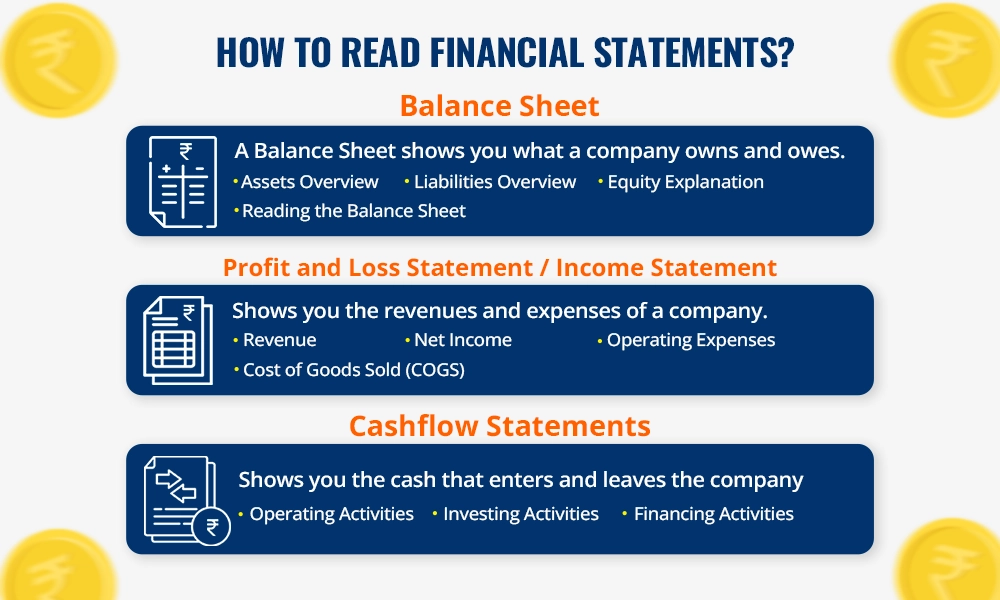
How to Read Financial Statements: A Clear English Guide
Financial statements can feel like a foreign language, especially when you’re new to accounting or business analysis. Yet they are the most reliable snapshot of a company’s health, revealing everything from profitability to cash flow. This guide breaks down the essentials in plain English, helping you move from confusion to confidence in just a few minutes.
Why Financial Statements Matter
Investors, lenders, and even employees rely on these documents to gauge performance. A well‑prepared set tells you whether a business can meet its debts, grow its earnings, or survive a market downturn. Without them, decisions would be based on guesswork rather than data.
Three Core Statements You’ll Encounter
Most businesses produce three primary reports, each serving a distinct purpose.
- Balance Sheet – A snapshot of assets, liabilities, and equity at a specific date.
- Income Statement (or Profit & Loss) – Shows revenues, expenses, and net profit over a period.
- Cash Flow Statement – Tracks the movement of cash in operating, investing, and financing activities.
Understanding how these pieces fit together is the first step toward reading them fluently.
Dissecting the Balance Sheet
The balance sheet follows the simple equation: Assets = Liabilities + Equity. Assets are what the company owns—cash, inventory, equipment—while liabilities represent what it owes, such as loans or accounts payable. Equity is the residual interest of shareholders after debts are settled.
Key ratios derived from the balance sheet include the current ratio (Current Assets ÷ Current Liabilities) and debt‑to‑equity ratio (Total Debt ÷ Shareholders’ Equity). These numbers quickly signal liquidity and leverage risks.
Reading the Income Statement
The income statement starts with revenue, subtracts cost of goods sold (COGS) to reveal gross profit, then deducts operating expenses, interest, and taxes to arrive at net income. Each line tells a story about efficiency and cost control.
Margins are the most common performance indicators. Gross margin (Gross Profit ÷ Revenue) shows production efficiency, while operating margin (Operating Income ÷ Revenue) reflects overall management effectiveness. A healthy net margin often indicates a competitive advantage.
What the Cash Flow Statement Reveals
Profit doesn’t always equal cash. The cash flow statement reconciles this by categorizing cash movements:
- Operating Activities – Cash generated from core business operations.
- Investing Activities – Purchases or sales of long‑term assets.
- Financing Activities – Debt issuance, repayments, or dividend payments.
Positive operating cash flow is a good sign; negative cash flow may signal trouble unless it’s tied to strategic investments.
Common Pitfalls for Beginners
Even seasoned analysts stumble over a few recurring mistakes:
- Focusing solely on net income and ignoring cash flow. A company can report profit while running out of cash.
- Comparing figures without adjusting for seasonality or one‑time events. A holiday‑driven spike can distort trends.
- Reading the balance sheet in isolation. A strong asset base means little if it’s financed entirely by short‑term debt.
Keeping these traps in mind helps you ask the right questions instead of accepting numbers at face value.
Practical Tips to Master Financial Statements
1. Start with the Big Picture – Review the three statements together to see how profit translates into cash and how assets are funded.
2. Use Ratios Sparingly – Pick a handful of relevant metrics rather than overwhelming yourself with every possible calculation.
3. Benchmark Against Peers – Industry averages provide context for whether a margin or ratio is truly strong.
4. Read the Footnotes – Disclosures explain accounting policies, contingent liabilities, and any unusual items that could skew the numbers.
5. Practice with Real Reports – Download annual reports from publicly traded companies and apply the steps you’ve learned. Repetition builds fluency.
FAQ
What’s the difference between an income statement and a cash flow statement?
The income statement records earned revenue and incurred expenses on an accrual basis, while the cash flow statement tracks actual cash entering and leaving the business during the same period.
Why might a company have high profits but low cash?
Profit can be tied up in accounts receivable, inventory, or capital expenditures. Until those assets convert to cash, the cash flow statement will show a shortfall.
Can I rely on a single year’s financial statements?
One year offers a snapshot, but trends emerge over multiple periods. Comparing three‑year averages reduces the impact of anomalies and provides a clearer performance trajectory.
Do all companies present the same format?
Generally, yes—most follow Generally Accepted Accounting Principles (GAAP) or International Financial Reporting Standards (IFRS). However, footnotes may reveal variations in terminology or classification.