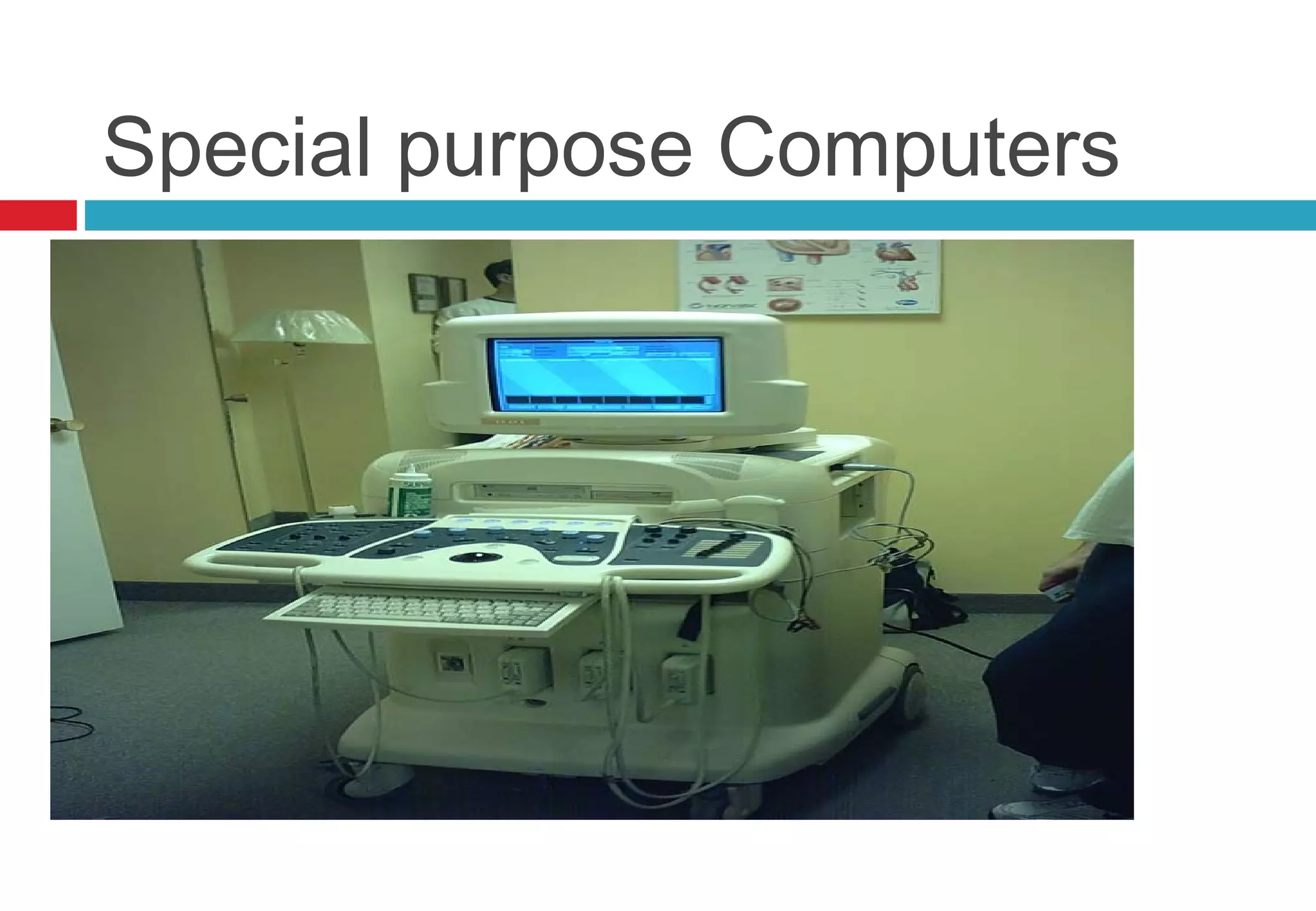
How Special-Purpose Computers Power Modern Industries
When you hear “computer,” you probably picture a desktop or a laptop that handles a wide range of tasks. Special purpose computers, however, are built for a single, well‑defined job, and that focus lets them excel where general‑purpose machines fall short. From controlling traffic lights to crunching massive climate models, these dedicated systems are quietly shaping the world around us.
What Makes a Computer “Special Purpose”?
A special purpose computer differs from an everyday PC in three key ways:
- Task‑specific hardware: The processor, memory, and I/O are chosen to match the workload, often resulting in faster, more reliable operation.
- Optimized software stack: The operating system and applications are stripped down to the essentials, reducing overhead.
- Real‑time constraints: Many of these machines must respond within strict timing windows, a requirement that general‑purpose computers rarely meet.
Because every component is tuned for one job, these machines can be more energy‑efficient, cheaper to run, and harder to fail.
Everyday Examples of Special Purpose Computers
While some applications feel high‑tech, many special purpose computers live in plain sight.
1. Embedded Controllers in Appliances
Think of the microcontroller that runs a microwave oven. It monitors the keypad, controls the magnetron, and ensures safety interlocks engage. The same principle applies to washing machines, thermostats, and even electric toothbrushes.
2. Traffic Management Systems
City traffic lights are coordinated by dedicated computers that process sensor data, prioritize emergency vehicle routes, and adapt signal timing to congestion patterns. Their real‑time performance keeps intersections moving smoothly.
3. Point‑of‑Sale (POS) Terminals
Retail checkout stations run a narrow set of functions: scanning barcodes, handling payment encryption, and printing receipts. By focusing on these tasks, POS devices achieve high reliability and rapid transaction times.
4. Gaming Consoles
Although they can stream movies and browse the web, consoles like the PlayStation or Xbox are engineered primarily for graphics‑intensive, low‑latency gaming. Custom GPUs and tightly integrated memory give them an edge over standard PCs for this purpose.
Industrial and Scientific Uses
Beyond consumer gadgets, special purpose computers are the backbone of many critical sectors.
5. Automation in Manufacturing
Programmable Logic Controllers (PLCs) monitor assembly lines, robot arms, and quality‑control sensors. Their deterministic operation means a car can be assembled with millisecond precision, reducing waste and downtime.
6. Medical Imaging Devices
CT scanners and MRI machines rely on high‑speed data acquisition boards that convert raw signals into detailed images in real time. The dedicated hardware accelerates reconstruction algorithms that would be sluggish on a regular PC.
7. Aerospace Navigation
Flight control computers aboard aircraft and spacecraft perform continuous calculations for stability, navigation, and engine management. Their fault‑tolerant designs must operate flawlessly under extreme conditions.
8. Climate and Weather Modeling
Supercomputers devoted solely to atmospheric simulations ingest terabytes of sensor data and run complex fluid‑dynamics equations. While still massive, they are considered special purpose because the entire architecture is optimized for parallel numerical workloads.
Why Organizations Choose Special Purpose Systems
Cost, reliability, and performance are the three pillars that drive adoption.
- Lower Total Cost of Ownership: By eliminating unnecessary components, maintenance budgets shrink and power consumption drops.
- Higher Availability: With fewer moving parts and a stripped‑down software stack, downtime becomes a rare event.
- Regulatory Compliance: Certain industries—such as medical devices or automotive safety—require certified hardware that can only be achieved with purpose‑built systems.
In many cases, the initial investment in a custom solution pays off within a few years through saved energy and reduced labor.
Future Trends: Reconfigurable and Edge‑Focused Designs
As the Internet of Things expands, the line between general‑purpose and special purpose computers blurs. Field‑Programmable Gate Arrays (FPGAs) allow a single board to be reprogrammed for different tasks, offering the flexibility of a PC with the efficiency of a dedicated machine. Meanwhile, edge computing pushes processing closer to data sources—think smart cameras that analyze footage on‑device, reducing bandwidth and latency.
These hybrid approaches suggest a future where “special purpose” may mean “specializable on demand,” combining the best of both worlds.
FAQ
What is the main difference between a special purpose computer and a regular PC?
A special purpose computer is engineered for a single, predefined function, using hardware and software optimized for that task, whereas a regular PC is designed to handle a broad range of applications.
Can I build a special purpose computer at home?
Yes, hobbyists often create custom boards for projects like home automation or robotics, using development kits such as Arduino or Raspberry Pi, which embody the same principle of task‑specific design.
Do special purpose computers require special operating systems?
Often they run real‑time operating systems (RTOS) or even bare‑metal code without an OS, to meet strict timing and reliability requirements.
Are they more secure than general‑purpose machines?
Because they expose fewer services and have a limited attack surface, they can be inherently more secure, though security still depends on proper design and updates.