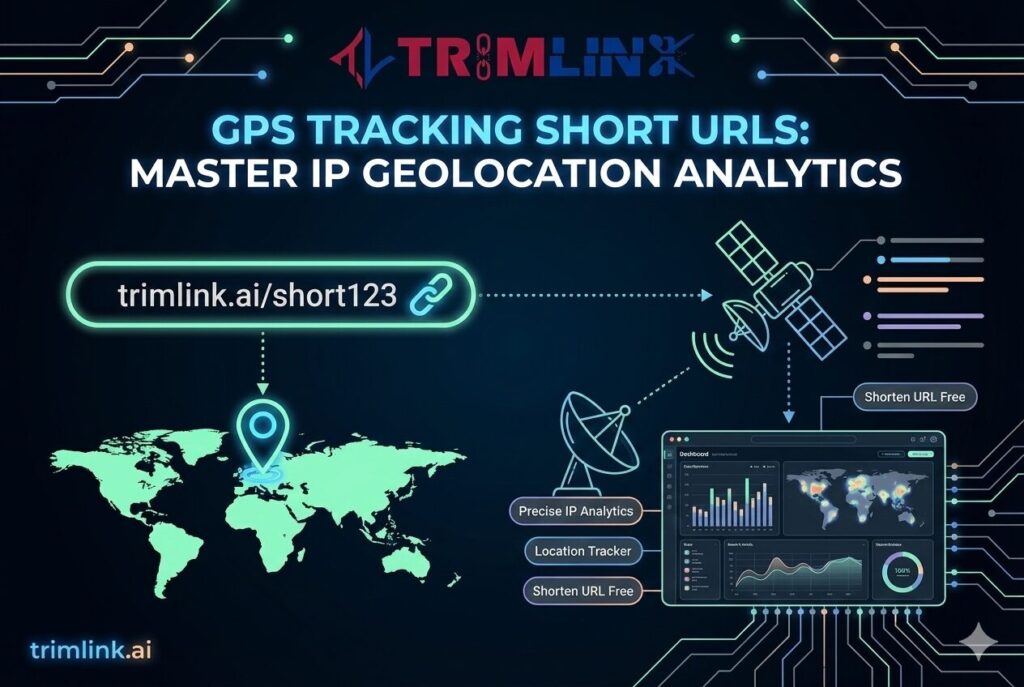
How Precise GPS Geolocation Really Tracks Your Location
When you pull up a map on your phone and see a blue dot snapping to a street corner, you’re witnessing GPS geolocation precise location tracking in action. It sounds high‑tech, but the underlying mechanics are a blend of physics, satellite math, and a dash of clever engineering. Let’s peel back the layers and see what makes that dot so exact—or, sometimes, surprisingly off.
Understanding GPS Geolocation Precise Location Tracking
At its core, GPS (Global Positioning System) relies on a constellation of at least 24 satellites orbiting Earth. Each satellite continuously broadcasts a signal that includes the exact time it was sent. Your device—whether a smartphone, car navigation unit, or smartwatch—picks up signals from multiple satellites and measures how long each took to arrive.
By multiplying the travel time by the speed of light, the receiver calculates its distance from each satellite. With distances from at least four satellites, it can triangulate its three‑dimensional position (latitude, longitude, and altitude) and sync its clock. This process, called trilateration, is the heart of GPS geolocation precise location tracking.
Why “Precise” Is Both a Promise and a Challenge
In ideal conditions, a GPS lock can pinpoint you within a few meters. However, several real‑world factors stretch that precision:
- Atmospheric interference: Ionospheric and tropospheric layers slow the signal, introducing small timing errors.
- Multipath reflections: In urban canyons or dense forests, signals bounce off buildings or trees, confusing the receiver.
- Satellite geometry: The relative positions of visible satellites affect accuracy; a tight cluster yields less reliable fixes.
- Receiver quality: Consumer‑grade chips balance cost and power consumption, often sacrificing a bit of accuracy for longer battery life.
Because of these variables, “precise” is a qualified term—accurate enough for most everyday uses, but not a substitute for survey‑grade equipment.
Techniques That Boost Everyday Accuracy
Device manufacturers and app developers have layered several tricks on top of raw GPS data to tighten the margin of error:
- Assisted GPS (A‑GPS): By tapping into cellular towers and Wi‑Fi networks, a device can get an initial location estimate faster, especially when satellite signals are weak.
- Differential GPS (DGPS): Ground‑based reference stations broadcast correction data, shaving a meter or two off the error.
- Real‑time Kinematic (RTK) positioning: Used in agriculture and construction, RTK leverages carrier‑phase measurements for centimeter‑level precision—though it requires a nearby base station.
- Sensor fusion: Accelerometers, gyroscopes, and barometers fill in gaps, smoothing out jumps when the satellite lock falters.
Most smartphones blend these methods automatically, so you rarely notice the behind‑the‑scenes work.
When Precision Matters: Real‑World Applications
Beyond navigation, high‑precision tracking fuels a growing list of services:
- Fleet management: Companies monitor vehicle routes, fuel use, and driver behavior down to a few meters, optimizing logistics.
- Health and fitness: Runners and cyclists rely on accurate distance and elevation data to track progress.
- Emergency response: First responders use precise location data to locate callers in remote or obstructed areas.
- Augmented reality (AR): Games and utilities overlay digital objects onto the physical world; misalignment would break the illusion.
In each case, the tolerance for error varies, but the baseline expectation is that GPS geolocation precise location tracking will be reliable enough for the task.
Common Misconceptions About GPS Accuracy
Many people assume GPS is either perfect or useless, but reality sits in a middle ground. Here are a few myths busted:
- My phone always knows where I am: Indoor environments often block satellite signals, forcing the device to fall back on Wi‑Fi or Bluetooth beacons, which are less precise.
- More satellites = better accuracy: Quantity helps, but the geometry (known as the dilution of precision) matters more. Four satellites spread evenly across the sky yield a better fix than eight clustered on one side.
- GPS works the same everywhere: Near the poles, satellite coverage thins, and high‑rise urban areas create signal shadows that degrade accuracy.
Privacy Implications of Precise Tracking
With great precision comes a heightened privacy risk. Apps that collect GPS data can reconstruct detailed movement patterns, revealing home addresses, workplace locations, and daily routines.
Regulations such as the GDPR in Europe and the CCPA in California require explicit consent before an app can store or share location data. Users can also limit precision by disabling “precise location” permissions on their devices, opting for an approximate fix instead.
Future Trends: Toward Even Better Precision
The next generation of GNSS (Global Navigation Satellite Systems) promises denser constellations—think GPS III, Galileo, and BeiDou—all broadcasting stronger, more resilient signals. Coupled with advances in machine learning for error correction, we’re inching toward sub‑meter reliability even in challenging environments.
Meanwhile, emerging technologies like 5G positioning and ultra‑wideband (UWB) chips could complement satellite data, offering indoor precision that rivals outdoor GPS performance.
Quick Tips for Getting the Best GPS Fix
- Step outside or near a window to improve satellite visibility.
- Give your device a moment to settle; the first few seconds often show jitter.
- Keep the sky overhead clear of tall buildings or dense foliage when possible.
- Enable “high accuracy” mode in location settings, which activates A‑GPS and Wi‑Fi assistance.
FAQ
How accurate is typical smartphone GPS?
Under open sky, most modern smartphones achieve 3–5 meters of accuracy. In urban canyons or indoors, the error can rise to 10–20 meters unless assisted by Wi‑Fi or Bluetooth.
Can I improve GPS accuracy without buying new hardware?
Yes. Updating your device’s operating system, enabling assisted GPS, and ensuring a clear view of the sky are low‑cost ways to tighten the fix.
Is “precise location” the same as “approximate location”?
No. Precise location shares exact latitude and longitude, while approximate location typically rounds to the nearest city or region, providing a privacy‑friendly alternative.
Do GPS satellites ever need maintenance?
They’re designed for decades of operation, but older satellites are periodically decommissioned and replaced to maintain constellation health and improve signal quality.