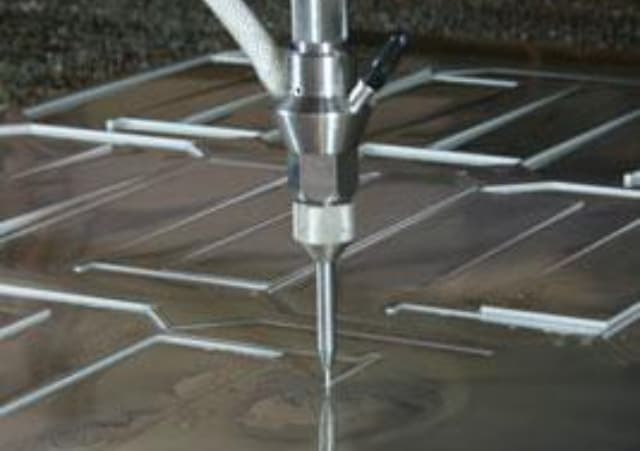
How Ceramic Water‑Jet Cutting Perfects Precision
When it comes to shaping delicate ceramics, manufacturers have long wrestled with the trade‑off between speed and accuracy. Traditional grinding or laser methods can introduce micro‑cracks, discoloration, or uneven edges. ceramic water jet cutting sidesteps many of those pitfalls by harnessing a high‑velocity stream of water mixed with abrasive particles. The result? clean, repeatable cuts that preserve the material’s inherent strength and aesthetic.
What Sets Ceramic Water‑Jet Cutting Apart?
At its core, the process is deceptively simple: a pump drives water at pressures often exceeding 60,000 psi through a tiny orifice. Abrasives—typically garnet—are injected downstream, turning the liquid jet into a microscopic sanding belt. Unlike lasers, the water jet never heats the workpiece, so thermal shock is virtually nonexistent.
What makes it especially suited for ceramics is the jet’s ability to follow intricate paths without exerting mechanical stress that could shatter the brittle substrate. The technology has matured over the past two decades, and today’s systems boast computer‑numerical‑control (CNC) interfaces that translate digital designs into motion with sub‑millimetre fidelity.
How Precision Is Engineered Into Every Cut
Achieving “perfect” precision isn’t a matter of cranking up pressure alone; it’s a symphony of hardware, software, and material science.
1. Nozzle Geometry and Materials
The nozzle—often made from sapphire or ruby—must endure relentless wear while maintaining a perfectly round aperture. Modern designs feature interchangeable tips that allow technicians to swap diameters ranging from 0.1 mm to 1 mm, tailoring the jet’s focus to the desired tolerance.
2. Pressure Stabilization Systems
Even a 1 % fluctuation in pressure can translate into a noticeable deviation at the cut edge. To combat this, many machines incorporate real‑time feedback loops that monitor pump output and adjust valve positions on the fly. The result is a steadier stream that holds its shape over longer cutting runs.
3. Dynamic Positioning and CNC Accuracy
High‑resolution encoders track the motion of the cutting head with micron‑level precision. Coupled with motion‑control software that compensates for acceleration and deceleration, the jet can follow complex contours—think lattice patterns or fine filigree—without overshooting.
4. Abrasive Selection and Flow Rate
Garnet’s hardness makes it ideal for slicing ceramics, but the grain size and concentration matter. Finer grains produce smoother edges, while a higher flow rate can increase cut speed without sacrificing accuracy, provided the pump can sustain the pressure.
By fine‑tuning each of these variables, operators can routinely achieve tolerances tighter than ±0.05 mm—a benchmark that was once the exclusive domain of precision milling.
Why Choose Water‑Jet Over Traditional Methods?
First, the lack of heat means no thermal distortion, which is crucial for high‑gloss or glazed ceramics that might otherwise crack under sudden temperature changes. Second, the water‑jet’s ability to cut almost any thickness—ranging from a few millimetres to several centimetres—offers flexibility that grinding or CNC milling often can’t match.
Additionally, the process generates minimal dust, a significant advantage in clean‑room environments where airborne particulates can compromise downstream processes. And because the jet can be programmed to stop and start instantly, material waste is reduced; there’s no need for large scrap margins to accommodate tool‑path errors.
Real‑World Applications That Benefit From Perfected Precision
Architectural firms employ water‑jet cutting to fabricate intricate façade panels that blend structural integrity with artistic flair. In the medical field, ceramic prosthetics—such as ceramic hip components—require tight dimensional control to ensure proper fit, a task well suited to the water‑jet’s accuracy.
Even the consumer market sees the impact: high‑end cookware manufacturers produce ceramic knives and cutting boards with razor‑thin edges, while designers craft bespoke dinnerware featuring delicate lattice patterns that would be impossible to achieve by hand.
Across these sectors, the common thread is a demand for flawless edges, consistent dimensions, and a finish that doesn’t require extensive post‑processing. Ceramic water‑jet cutting delivers on all fronts, making it a go‑to solution for precision‑critical projects.
Maintaining Precision: Best Practices for Operators
- Regular nozzle inspection: Even sapphire tips wear over time; replacing them before they become too eroded preserves cut quality.
- Calibrate pressure sensors monthly: Small drift can accumulate, leading to off‑spec cuts.
- Use fresh abrasive: Clumped or contaminated garnet reduces cutting efficiency and can introduce surface chatter.
- Validate CNC programs with a dry run: Simulating the toolpath without water helps catch programming errors without risking material loss.
Frequently Asked Questions
Can water‑jet cutting handle glazed ceramics without damaging the glaze?
Yes. Because the process is cold and the jet’s impact is localized, the glaze typically remains intact. Operators may adjust abrasive flow to be gentler on especially thin glaze layers.
Is the water used in the cut recycled?
Many modern systems include filtration units that capture and reuse the majority of the water, making the process more sustainable and reducing operating costs.
How does the cut speed compare to laser cutting?
While lasers can be faster on thin, non‑metallic sheets, water‑jet cutting often outperforms them on thicker ceramics where laser penetration becomes inefficient.
Do I need specialized training to operate a ceramic water‑jet cutter?
Basic training is essential—understanding pressure settings, nozzle maintenance, and CNC programming ensures safety and precision. Most manufacturers offer certification courses.