HDR Showdown: HDR10+ vs. Dolby Vision – Which Tech Wins?
High‑dynamic‑range (HDR) has become the go-to way to make displays look richer, but not all HDR is created equal. When you ask, “HDR vs. HDR10+ vs. Dolby Vision – which is best?” the answer depends on what matters most to you: brightness, color accuracy, or ecosystem compatibility. Let’s break down the three leading standards and see where each shines.
HDR vs. HDR10+ vs. Dolby Vision – The Core Differences
All three standards aim to deliver deeper blacks and brighter whites, but they differ in how they communicate that information to the screen.
- HDR (General) – The umbrella term covering any content that exceeds standard dynamic range.
- HDR10+ – An extension of HDR10 that adds dynamic metadata (scene‑by‑scene or frame‑by‑frame adjustments). It’s an open, royalty‑free format widely adopted by manufacturers.
- Dolby Vision – A proprietary system that also uses dynamic metadata but offers up to 12‑bit color depth and a larger color gamut.
While HDR10 (static metadata) is the most basic version, the “plus” and Dolby Vision variants bring a level of precision that most viewers will notice on high‑end sets.
Brightness and Contrast: Who Reaches the Ceiling?
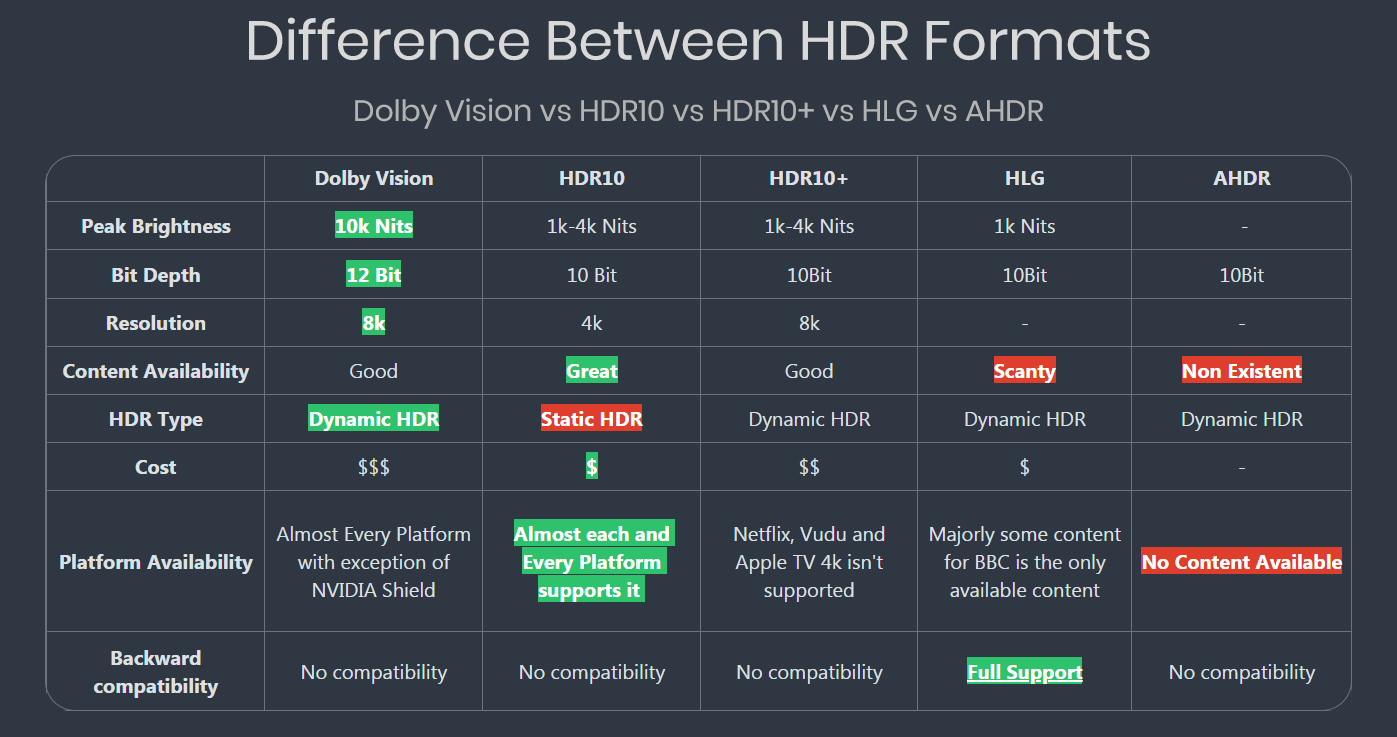
Peak brightness is a key metric for HDR performance. Dolby Vision content is mastered to 10,000 nits, but most consumer TVs peak around 1,000–4,000 nits. HDR10+ also supports up to 10,000 nits, but only if the broadcaster masters the content at that level.
In practice:
- Dolby Vision – Typically delivers a more consistent high‑light experience on TVs that can handle the required brightness.
- HDR10+ – Offers similar contrast when the TV’s peak is lower, thanks to dynamic metadata that compensates for limited hardware.
- HDR10 – Static metadata can’t adapt, so bright scenes may look washed out on some displays.
Color Depth and Gamut: The Spectrum of Realism
Color accuracy is where Dolby Vision has a clear advantage. It supports 12‑bit color versus the 10‑bit depth common to HDR10+.
For most casual viewers, the 10‑bit depth of HDR10+ is sufficient, especially on 4K TVs. However, photography enthusiasts and professional colorists often prefer Dolby Vision’s extra bit depth for smoother gradients.
Dynamic Metadata: Adapting to Each Scene
Both HDR10+ and Dolby Vision use dynamic metadata, but Dolby Vision’s per‑scene or per‑frame data is richer because it can specify 10‑bit values for each frame, while HDR10+ uses a 12‑bit value but fewer metadata points.
Resulting impact:
- Dolby Vision – Better handling of complex lighting, such as a bright sun hitting a dark background.
- HDR10+ – Good for most HDR10+‑mastered content, though may lose subtle detail in extreme highlights.
Device Support: Which Platforms Have the Edge?
Device compatibility can decide which standard is best for you.
- Dolby Vision – Supported on many premium smart TVs (Sony, LG, Vizio, TCL), streaming services (Netflix, Disney+, Apple TV+), and Blu‑ray discs.
- HDR10+ – Adopted by Samsung, Panasonic, Philips, and some Roku devices. Streaming support is growing on platforms like Amazon Prime Video and YouTube.
- HDR10 – Universally supported; virtually every HDR‑capable device can play HDR10 content.
Content Availability: What Can You Watch?
Content libraries vary by region, so check what’s available before you commit.
- Netflix: Primarily Dolby Vision for U.S. subscribers; HDR10+ in a few countries.
- Amazon Prime Video: Dolby Vision and HDR10+ options depending on the title.
- Disney+: Dolby Vision on most titles; HDR10+ in limited releases.
- Apple TV+: Dolby Vision for most 4K HDR titles.
For the widest compatibility, HDR10 content is the safest bet, but you’ll miss out on the refined picture that dynamic metadata provides.
Choosing the Right TV: Matching Hardware to Standard
Even the best HDR format will falter if the TV can’t keep up.
When shopping:
- If you want a budget‑friendly option, a TV that supports HDR10+ will still deliver excellent performance for most shows.
- For a premium experience, look for a Dolby Vision‑capable TV from a top brand.
- Ensure the TV’s peak brightness and local dimming technology align with the HDR standard you prioritize.
Is the Extra Cost Worth It?
Dolby Vision‑capable TVs often come with a price premium, but the difference is usually under $200 for comparable models. If you’re already planning to upgrade, Dolby Vision is a future‑proof choice. If budget is a concern, HDR10+ offers most of the same benefits without the extra cost.
Future Outlook: Will One Standard Dominate?
Industry trends suggest both HDR10+ and Dolby Vision will coexist. Dolby Vision remains the standard for high‑end content, while HDR10+ fills the gap for mid‑tier devices and streaming services. As hardware matures, the gap in performance narrows.
FAQ
- Q: Can a Dolby Vision TV play HDR10+ content?
A: Yes, most Dolby Vision TVs are backward compatible with HDR10+ and HDR10. - Q: Does HDR10+ offer better picture than HDR10?
A: HDR10+ adds dynamic metadata, so it usually provides a clearer image than static HDR10, especially in scenes with varying brightness. - Q: Is 12‑bit color depth crucial for casual viewing?
A: For most viewers, 10‑bit color is adequate. 12‑bit offers marginal gains that are more noticeable to professionals or in very bright scenes. - Q: Which streaming service supports Dolby Vision best?
A: Netflix, Disney+, and Apple TV+ prioritize Dolby Vision for many 4K titles.