Discover the Forgotten Weapons of Ancient China
When we picture ancient battlefields, swords and spears often dominate the imagination. Yet the arsenal of ancient Chinese military weapons was far richer, blending sharp craftsmanship with early engineering marvels. From the elegant jian sword to the thunderous fire lance, these tools not only shaped dynastic fortunes but also left a lasting imprint on warfare worldwide.
Ancient Chinese Military Weapons: A Category Overview
Broadly speaking, Chinese armaments fall into four families: close‑quarter melee tools, ranged projectiles, siege engines, and the nascent gunpowder devices that would later ignite a global revolution. Each group reflects the strategic priorities of the era—whether it was the need for disciplined infantry, the desire to dominate rivers, or the ambition to breach fortified walls.
Melee Weapons: Precision Meets Power
The infantryman’s toolkit was a study in balance. A typical soldier might carry a dao (single‑edged saber) for slashing, complemented by a qiang (long spear) for thrusting. The ge, a dagger‑axe with a perpendicular blade, offered a hybrid grip that could hook shields or pull riders from horseback. Meanwhile, the jian, a double‑edged straight sword, earned a reputation for its elegance and deadly accuracy, often reserved for officers and elite troops.
- Ge (dagger‑axe): Originating in the Shang dynasty, its hooked head allowed soldiers to sweep away enemy shields.
- Dao (saber): Favoured for its curved blade, ideal for cavalry and rapid cuts.
- Jian (straight sword): Symbol of scholarly martial virtue, used in ceremonial duels.
- Qiang (spear): Ranged up to 5 meters, a staple of foot soldiers for its reach.
Ranged Weapons: From Bow to Bolt
While the bow is a universal staple, the Chinese crossbow (nu) set a new benchmark for power and repeatability. Its composite limbs and sophisticated trigger mechanism could launch bolts with enough force to pierce armor at 150 meters—a distance that left many opponents stunned. Some designs even incorporated a wooden lever for rapid reloading, giving a single archer the firepower of several traditional archers.
Beyond the crossbow, the chuí (throwing spear) and the hand‑held sling provided flexibility for skirmishers. The latter, though simple, could hurl stones at velocities comparable to modern baseball pitches.
Siege Engines: Engineering the Battlefield
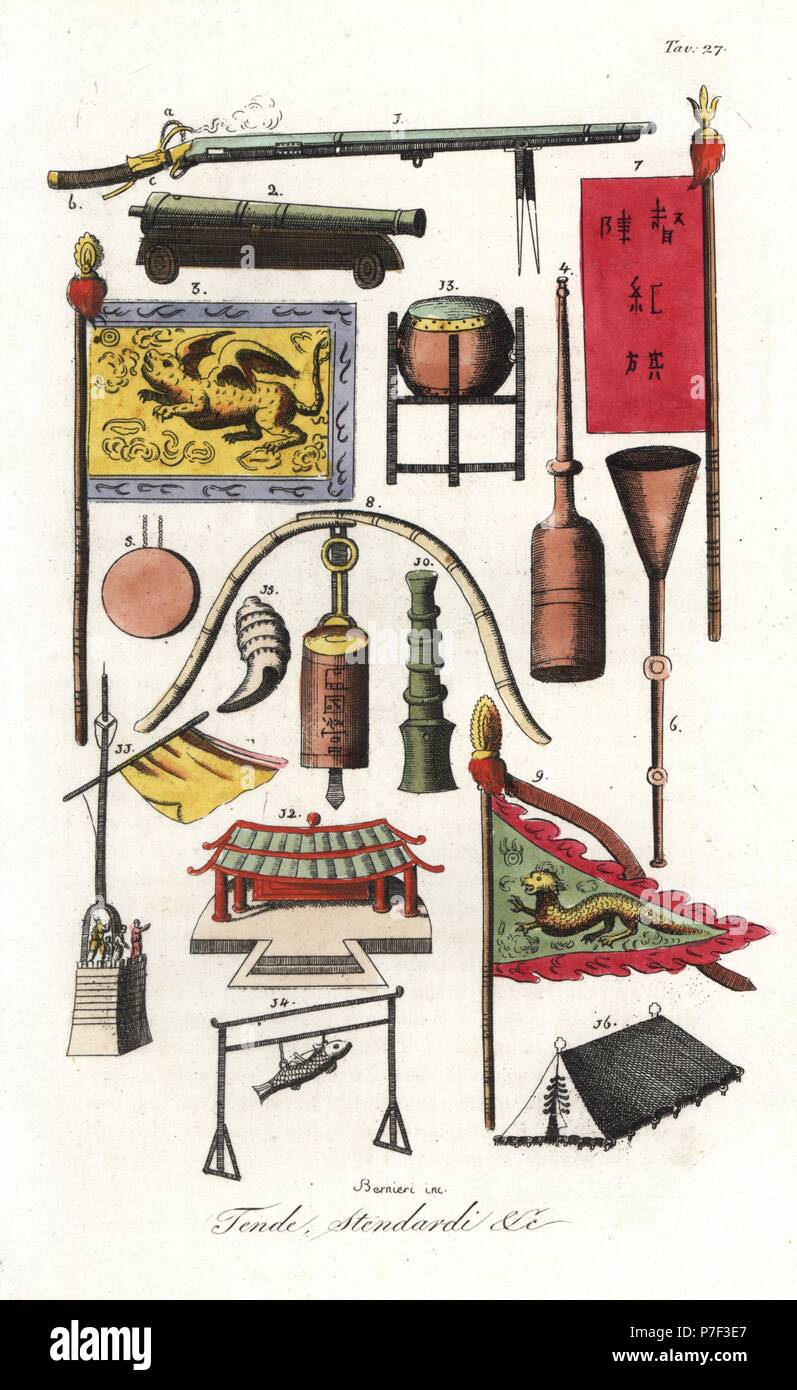
Chinese engineers turned the art of siege into a science. The hui chong (trebuchet) leveraged counterweights to fling massive projectiles, sometimes weighing up to 150 kilograms, over fortified walls. Meanwhile, the pao (early cannon) and the fang pao (fire lance) began to incorporate gunpowder, creating explosive shockwaves that broke morale as effectively as stone.
- Trebuchet (hui chong): Utilised a swinging arm and counterweight to launch projectiles up to 300 meters.
- Siege tower (jǐ lǒu): Multi‑story wooden structures that allowed troops to scale walls while staying protected.
- Covered battering ram: Reinforced with iron spikes and a shielded cabin to withstand defensive fire.
Early Gunpowder Weapons: The Dawn of Firepower
By the late Tang and early Song dynasties, alchemical experiments produced a volatile mixture of saltpeter, charcoal, and sulfur. The first military application was the fire lance—essentially a spear fitted with a bamboo tube that expelled a burst of flame and shrapnel. Though primitive, it foreshadowed the evolution of handheld firearms.
Later, the Song court deployed the black powder bomb, a ceramic vessel filled with incendiary material that detonated on impact. These “thunderclaps” sowed panic among enemy ranks, especially when used in coordinated volleys.
Why These Weapons Matter Today
Beyond their immediate tactical roles, ancient Chinese weapons influenced neighboring cultures. The design of the repeating crossbow spread along the Silk Road, while the concept of gunpowder warfare traveled eastward to the Middle East and westward to Europe. Modern historians and reenactors study these artifacts not just for nostalgia, but to understand how technology, geography, and doctrine intertwine.
Visiting museums such as the Shaanxi History Museum or the Palace Museum in Beijing offers a tactile glimpse into this legacy. The polished steel of a recovered dao still bears the subtle curve that balanced cutting efficiency with structural resilience—a reminder that centuries-old craftsmanship can rival today’s precision tools.
Frequently Asked Questions
What was the most common infantry weapon in ancient China?
The spear (qiang) and the dao (saber) were ubiquitous. Their versatility allowed soldiers to adapt to both close combat and formation fighting, making them the backbone of most armies.
How did Chinese crossbows differ from those of other cultures?
Chinese crossbows featured a sophisticated trigger mechanism and composite limbs, delivering higher draw weights and more consistent power. Some models even included a windlass for rapid reloading, a feature rarely seen elsewhere.
Did ancient Chinese armies use gunpowder weapons before the medieval period?
Early forms, like the fire lance and black powder bomb, appeared in the late Tang and early Song dynasties—roughly the 9th to 11th centuries CE—well before gunpowder became widespread in Europe.
Are any of these weapons still in use today?
While the exact designs are obsolete, their principles endure. Modern spears and bayonets echo the balance of the ancient qiang, and contemporary artillery owes a conceptual debt to the trebuchet’s emphasis on leverage and counterweights.