Beginner’s Guide: The Best Economics Books to Read
Why Reading Economics Matters
Economics is the study of how people and societies allocate scarce resources. Whether you’re a student, a budding entrepreneur, or simply curious about why prices rise, a solid grasp of the fundamentals can sharpen your decision‑making. Good books break down complex ideas into clear stories, helping you see the invisible forces that shape everyday life.
Key Themes You’ll Encounter
Even the simplest introductions cover a few recurring topics:
- Scarcity and choice – Why must we make trade‑offs?
- Supply and demand – How markets balance buyers and sellers.
- Incentives – What drives behavior in businesses and households.
- Market failures and public policy – When the market fails and the government steps in.
Look for books that weave these themes into engaging narratives rather than dense theory.
Top Picks for Absolute Beginners
Below are six books that consistently rank as the most approachable for newcomers. Each offers a different lens, so you can pick one that matches your learning style.
1. Economics in One Lesson by Henry Hazlitt (1946)
Hazlitt distills the core lesson of economics—considering the long‑run consequences of every decision—into a single, memorable story. The book’s conversational tone and historical anecdotes make it a quick read, yet it lays a solid foundation for deeper study.
2. Basic Economics by Thomas Sowell (1975)
Sowell presents the principles of economics in plain language, avoiding jargon. He explains how price signals work, why taxes matter, and how markets evolve, all while grounding concepts in everyday examples.
3. Naked Economics by Charles Wheelan (2008)
Wheelan’s trademark wit and humor guide readers through topics like inflation, globalization, and the gig economy. The book’s side‑by‑side visuals help demystify graphs and formulas.
4. The Undercover Economist by Tim Harford (2005)
Harford takes readers on a tour of hidden economic forces—from the price of coffee to the design of public transport. The narrative style makes abstract theories feel tangible.
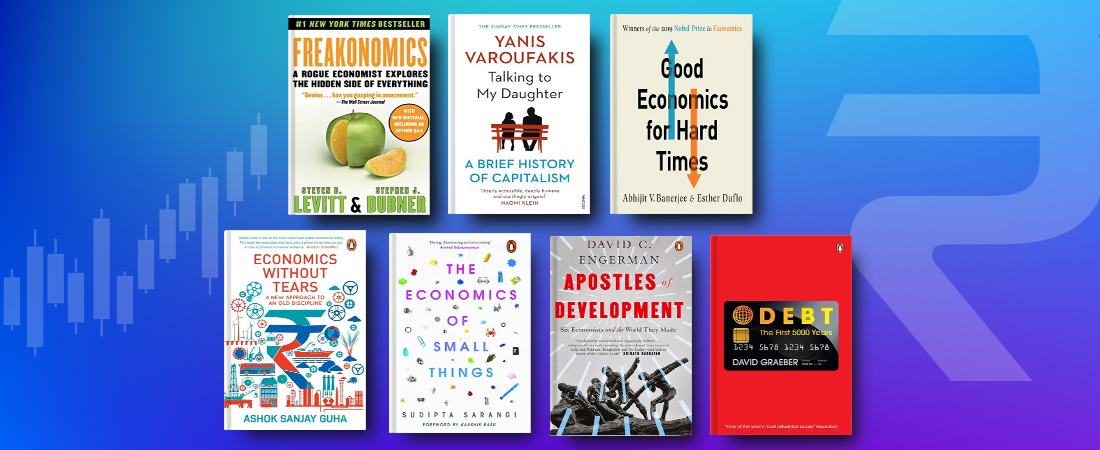
5. Freakonomics by Steven D. Levitt & Stephen J. Dubner (2005)
While not a textbook, Freakonomics applies economic thinking to unconventional questions, like why drug dealers do math. It illustrates how curiosity and data can uncover surprising patterns.
6. Principles of Economics by N. Gregory Mankiw (1985)
Mankiw’s book is a staple in introductory courses. It balances theory with real‑world examples and includes end‑of‑chapter summaries that reinforce key points.
How to Choose the Right Book for You
With so many titles available, here’s a quick decision framework:
- Learning style – Do you prefer narrative stories (Economics in One Lesson), data‑driven exploration (Freakonomics), or structured theory (Mankiw)?
- Depth vs. breadth – Want a sweeping overview? Pick a classic like Basic Economics. Looking for actionable insights? Go for The Undercover Economist.
- Time commitment – Some books are 200 pages, others 400+. Choose a length that fits your schedule.
- Supplementary materials – Check if the book offers companion websites, problem sets, or discussion forums. Mankiw’s online resources are especially helpful.
Reading one of these titles will give you a strong foothold before tackling more technical texts.
Beyond the Basics: Next Steps
Once you feel comfortable with the fundamentals, consider branching out:
- Thinking, Fast and Slow by Daniel Kahneman explores behavioral economics.
- Capital in the Twenty‑First Century by Thomas Piketty delves into inequality and growth.
- Academic journals like Journal of Economic Perspectives can keep you updated on current research.
Supplementary courses, podcasts, and discussion groups further enrich your understanding.
FAQ
- What makes a good beginner economics book? A clear narrative, minimal jargon, and real‑world examples that connect theory to everyday life.
- Do I need a math background to start? Not at all. Most introductory texts avoid heavy calculus and focus on intuition.
- How can I apply what I learn? Start by analyzing local market trends, reading news stories through an economic lens, or even running simple experiments, like comparing prices at different stores.